In short
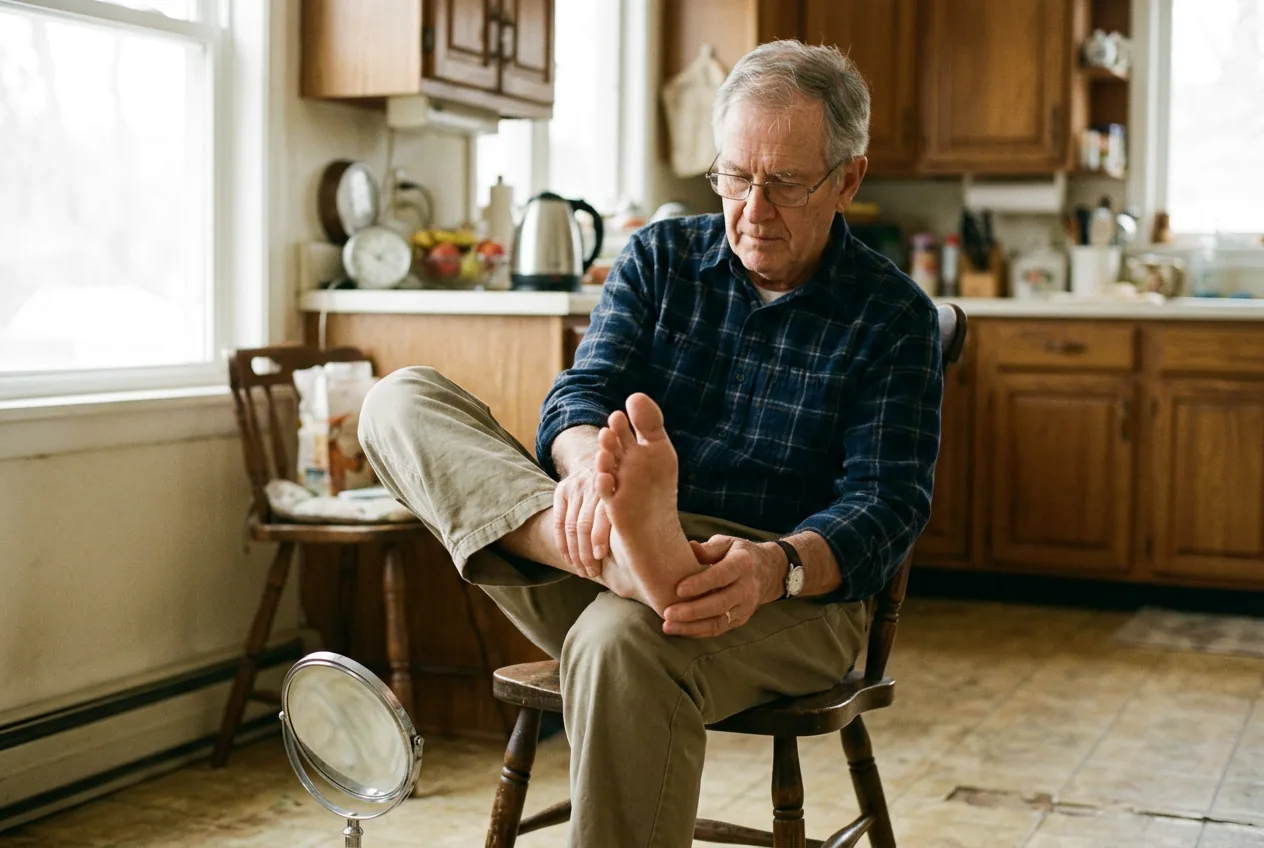
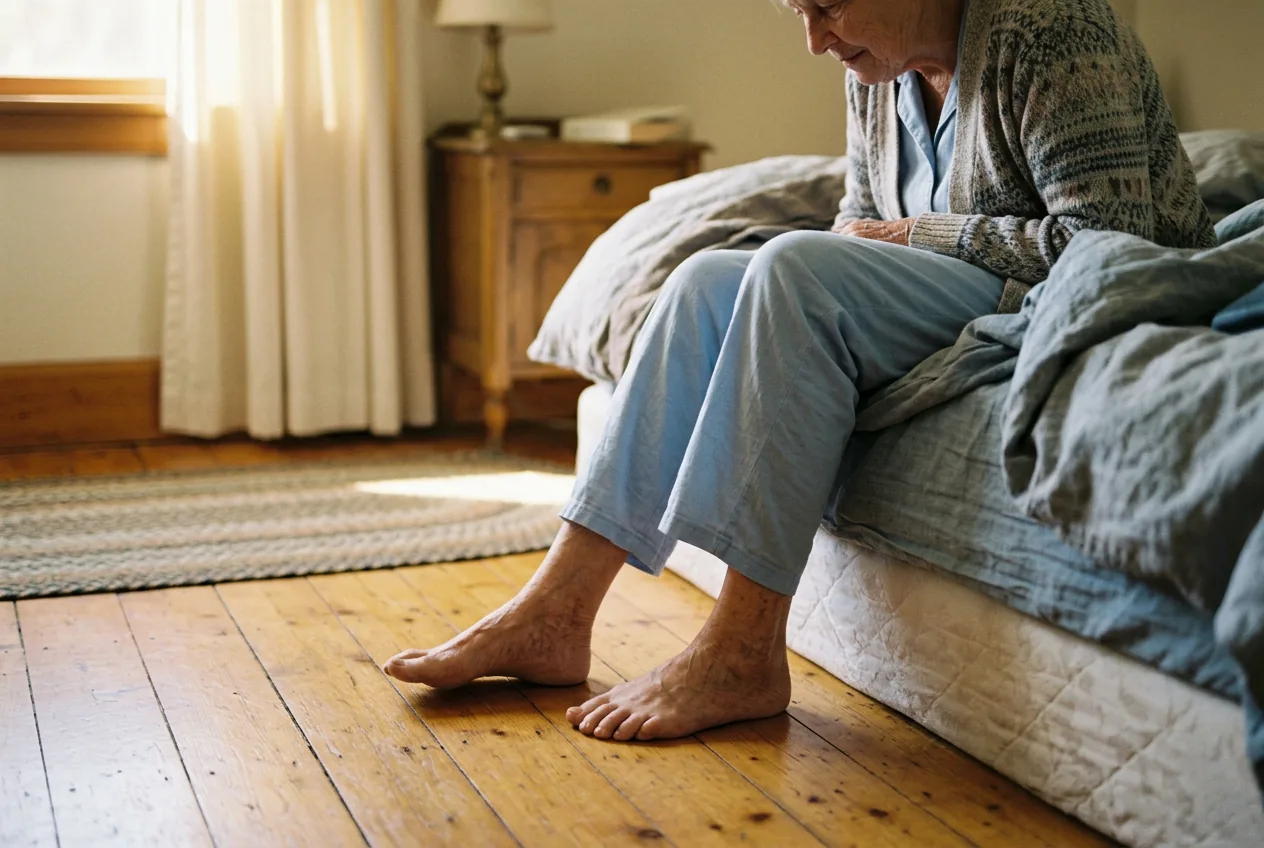
It is one of the most recognisable patterns in podiatry. The first few steps out of bed are sharp, it eases after ten minutes of moving about, and it comes back after you have been sitting a while. People often describe it as standing on a stone.
What is going on
The plantar fascia is a thick band of tissue running along the sole from the heel to the toes. Overnight it settles into a shortened position, and the first few steps stretch it suddenly. That is the morning pain. As you move, the tissue warms and lengthens and the pain eases, which is why it feels better by mid-morning and worse again after an hour at a desk.
It is a degenerative change in the tissue rather than an inflammation, which is why it does not respond to rest the way a fresh injury would.
What actually helps
Stretching, daily. Both the calf and the fascia itself. Done every day it makes a real difference; done twice a week it does very little. This is the part people underestimate.
A supportive shoe indoors. Padding about barefoot on hard floors is the thing most likely to keep it going. Wearing something supportive at home is often the single easiest change.
Taking the load off the sore spot. Cushioning, a heel raise or an insole where the foot needs it. Some people need a device made to their foot, and plenty do not.
Cutting back rather than stopping. Complete rest weakens the tissue and it hurts more when you start again. Reduce what aggravates it and keep moving within comfort.
What does not help
A scan showing a heel spur worries people more than it should. Plenty of people have a spur and no pain at all, and the spur is a consequence of the pull on the bone rather than the cause of your symptoms. Removing it is rarely the answer.
How long it takes
Months rather than weeks, for most people, and the pain usually eases well before the tissue has fully recovered. That sounds discouraging and is not meant to be: the point is that six weeks of doing the stretches properly is a fair trial, and giving up at two weeks tells you nothing.
When it is something else
Pain behind the heel rather than underneath it is the Achilles tendon, which is treated almost the opposite way, so it is worth knowing which you have. See Achilles pain.
Get it looked at promptly if the pain came on suddenly after a snap or a pop, if you cannot put weight on the heel, if it is red, hot or swollen, or if there is numbness or pins and needles spreading into the foot. Otherwise, heel and arch pain explains what an appointment involves.