
Pain and mobility
Ball of foot pain
Pain under the ball of the foot has a handful of causes that feel much the same and are treated quite differently — an overloaded joint, a thickened nerve, or hard skin doing what hard skin does. Sorting out which one it is comes first.
Treatment Summary
How long
30 minutes
What it costs
£35
No new patient fee.
Getting in
Free parking at the Tesco next door, under a minute's walk.
What we do
Does it hurt
No. We press the specific spots that tell us which structure is involved, which is briefly tender, and we tell you before we do it. Taking down any hard skin over the sore area is painless.
A short line in a patient's own words goes here, once we have a real one to use.
Placeholder — name and town go here.
The three things it usually turns out to be.
A joint being overloaded, a nerve being squeezed between two of the bones, or callus built up over a pressure point. They sit millimetres apart and they feel much the same to the person standing on them.
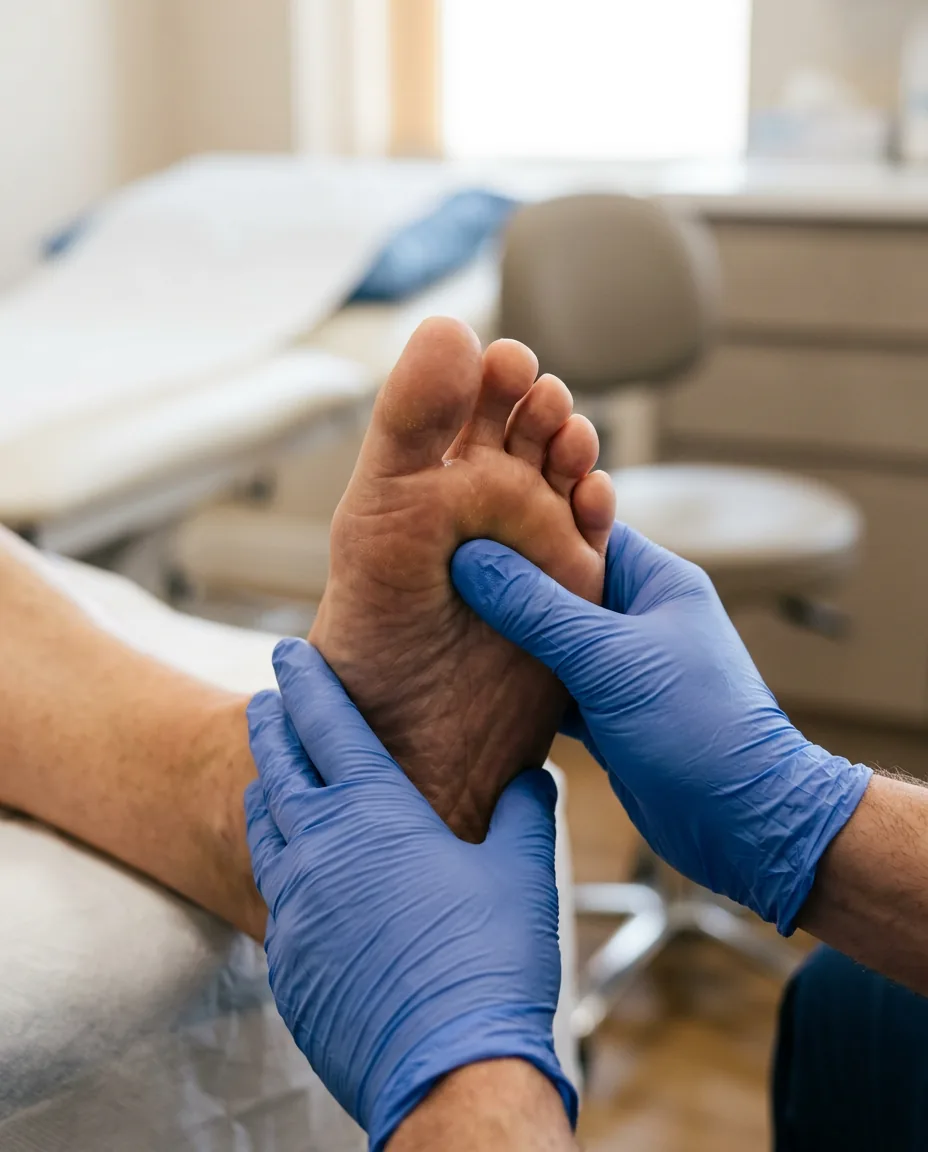
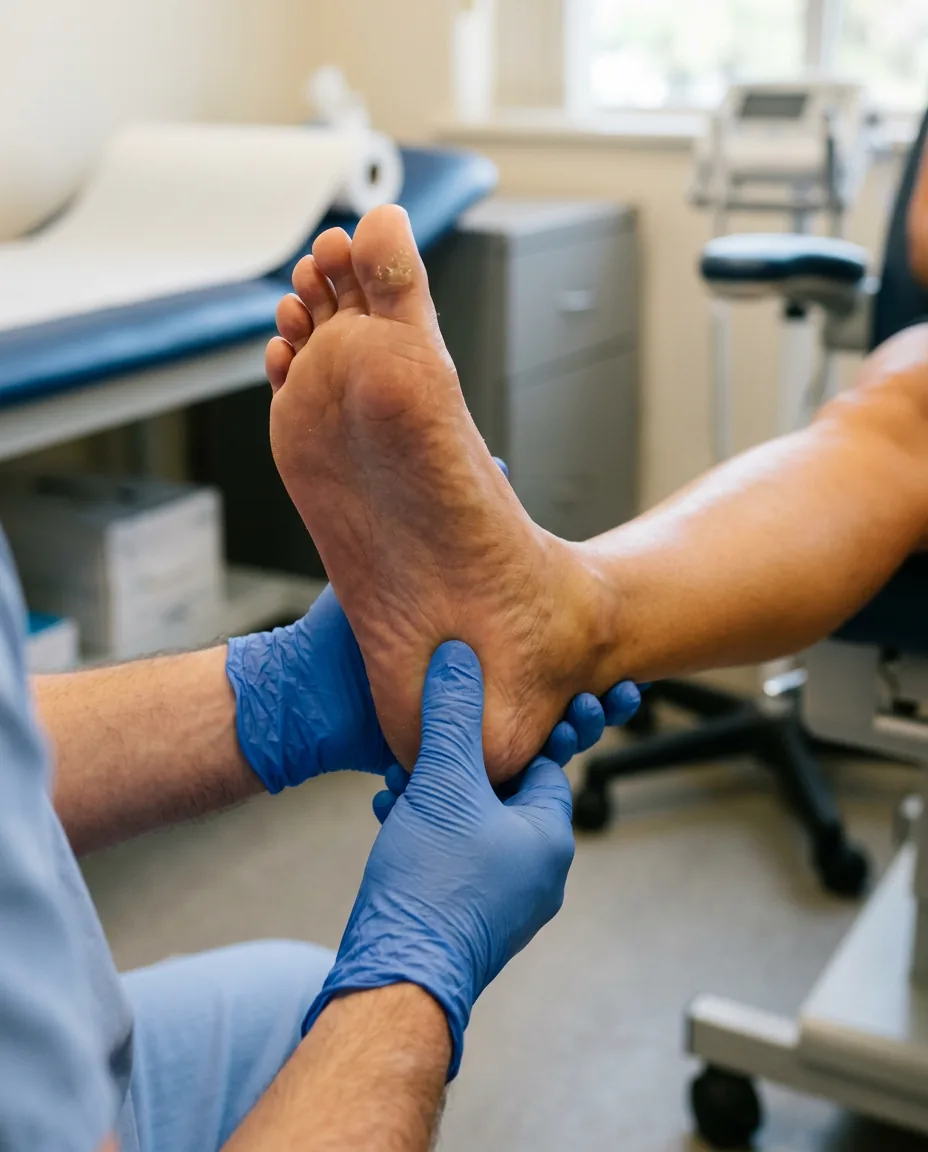
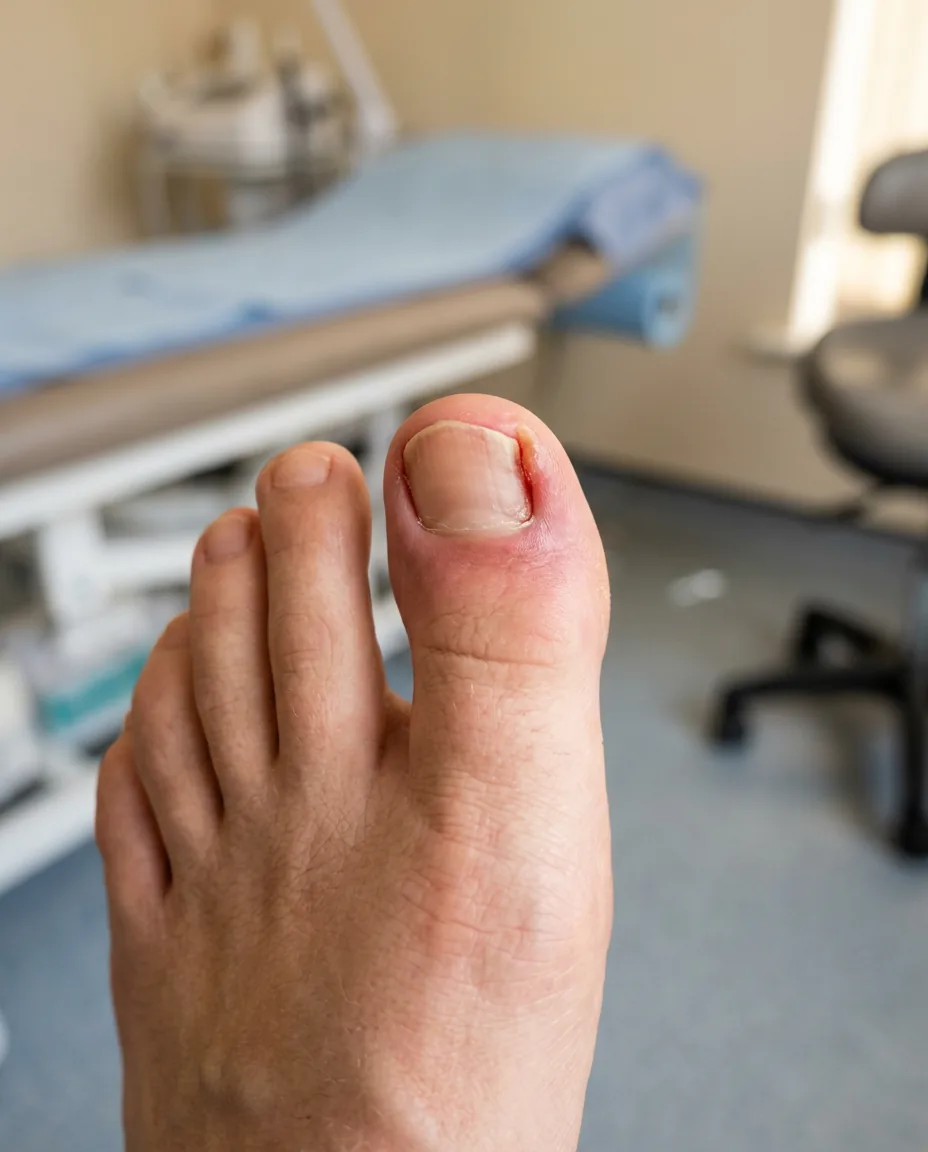
Pressing the painful spot on the ball of the foot — at Complete Chiropody and Podiatry in Chester-le-Street

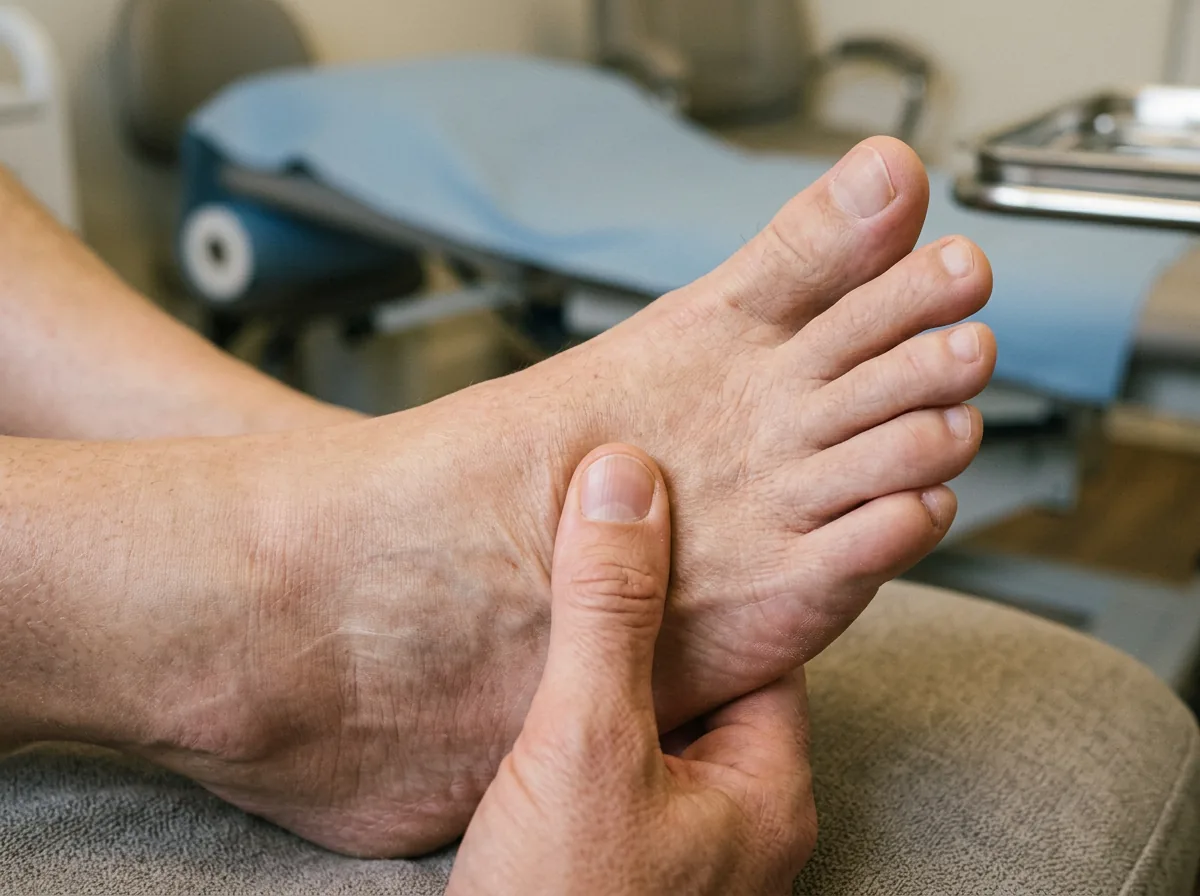
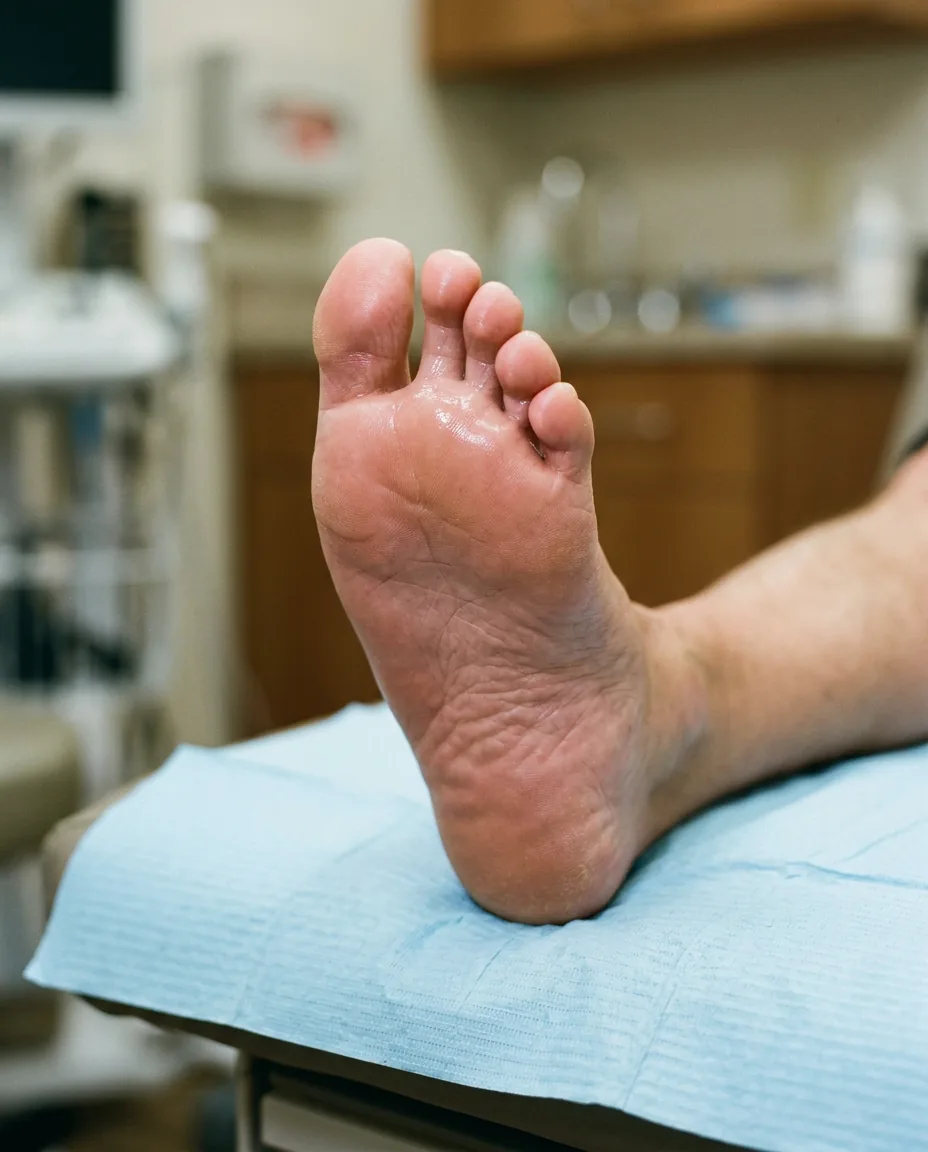
Testing between the toes for a Morton's neuroma — at Complete Chiropody and Podiatry in Chester-le-Street

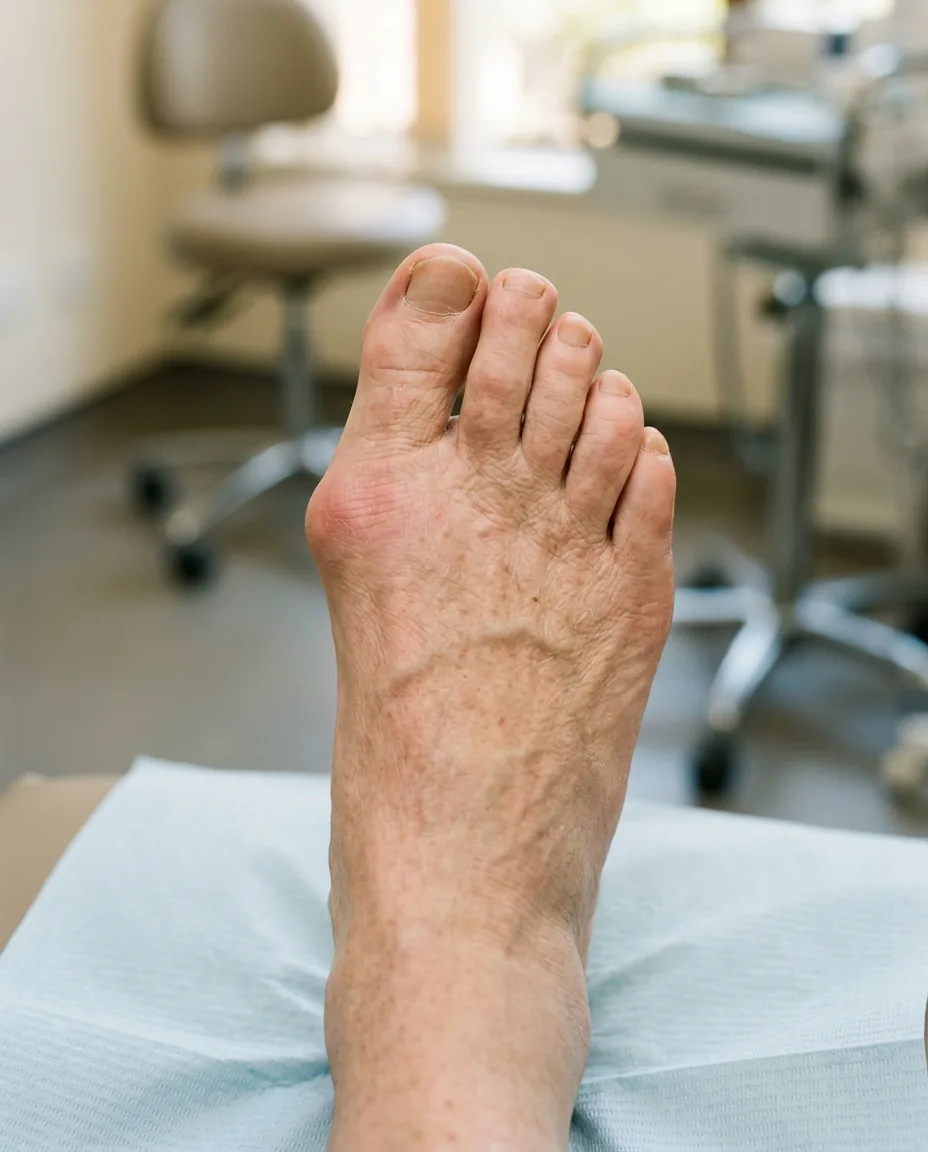
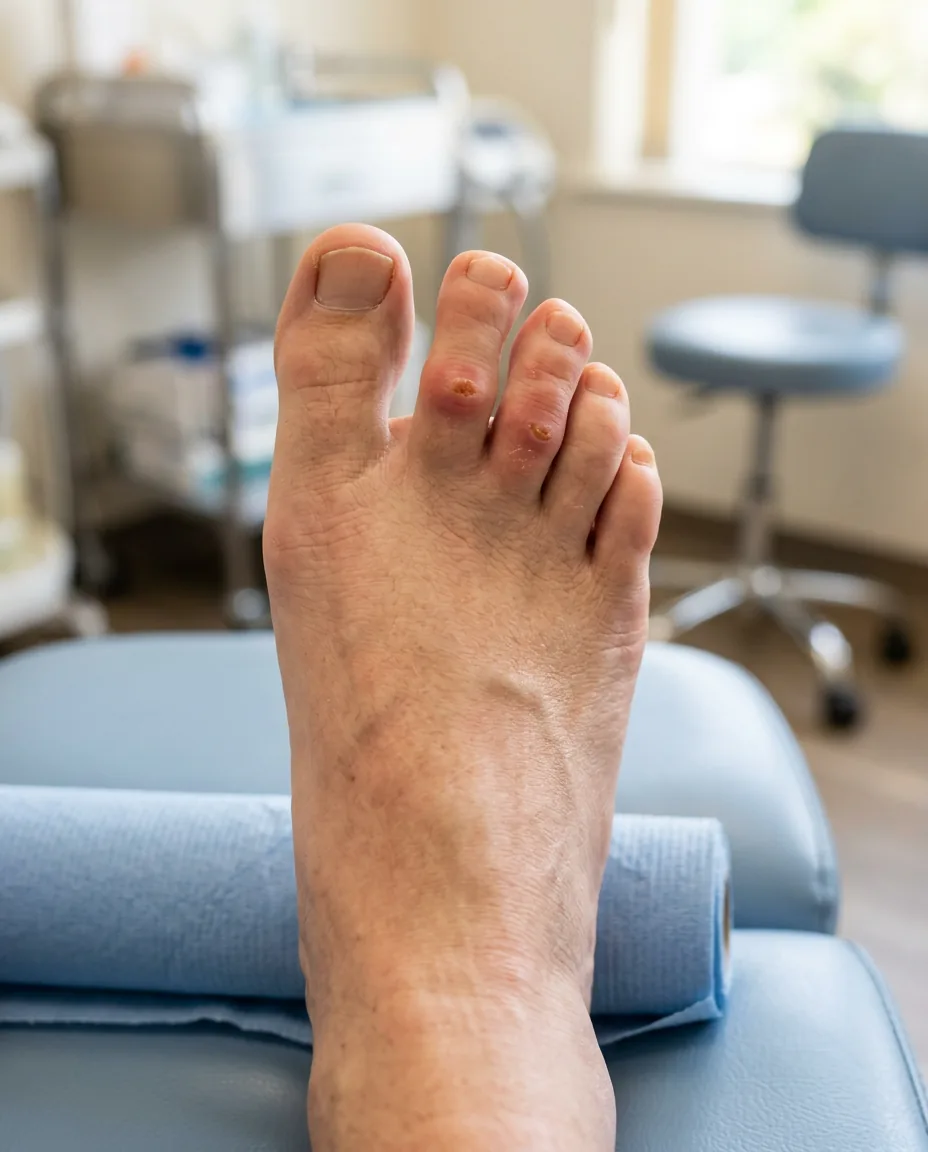
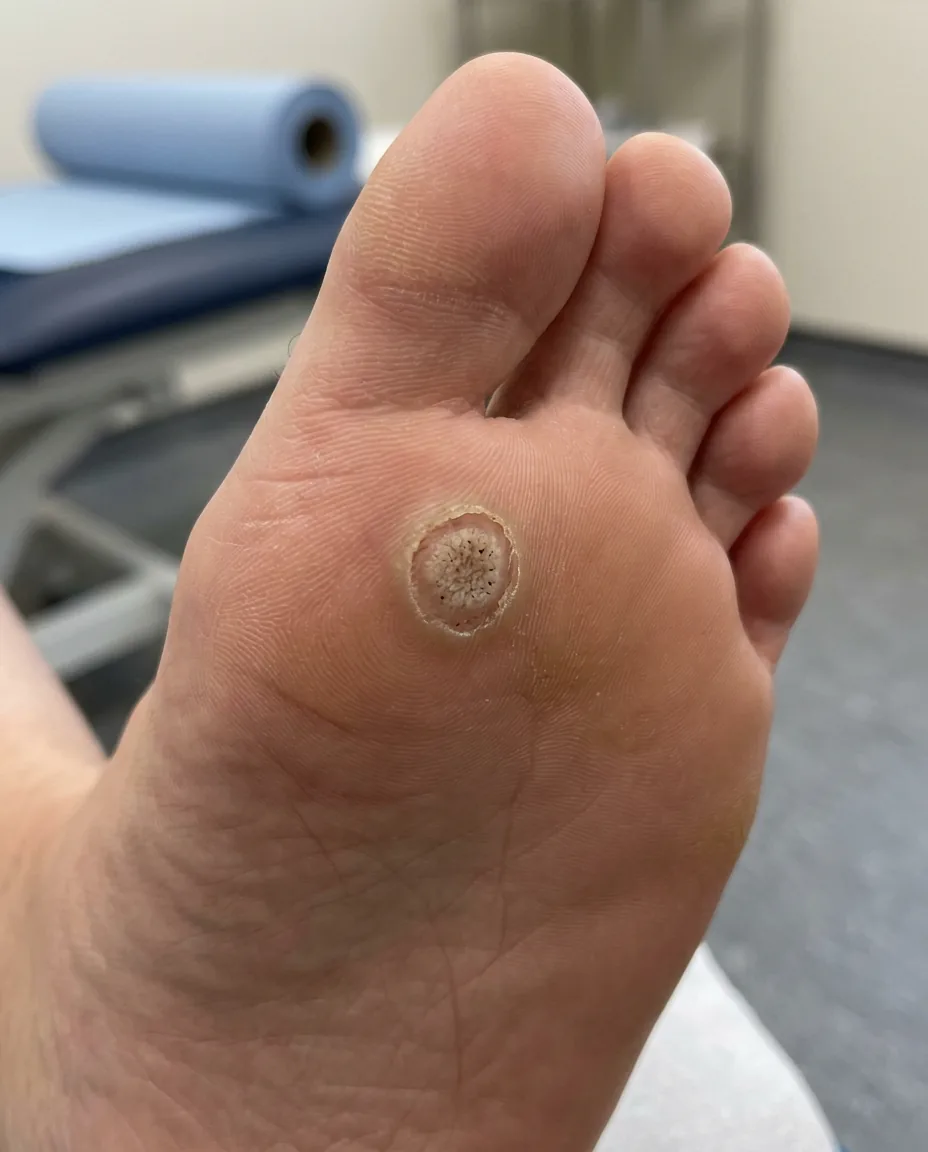
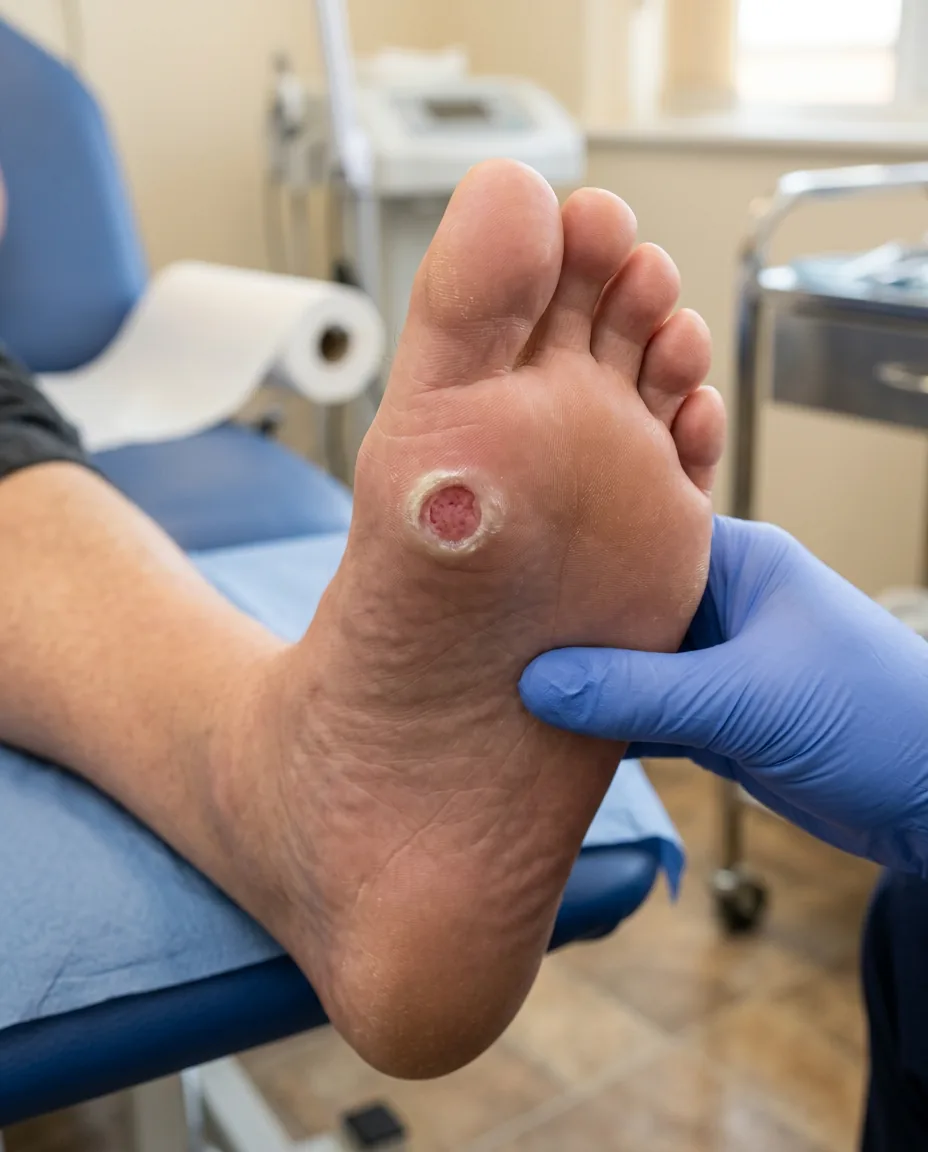
Hard skin built up under the ball of the foot — at Complete Chiropody and Podiatry in Chester-le-Street
Treatment Information
What we do about it.
01
We work out which structure it is
A joint that hurts when we press it directly, a nerve that gives a click and a shot of pain when we squeeze across the foot, and a callus you can see are three different answers. The examination usually settles it in a few minutes.
02
We take the load off the spot
Hard skin over the painful area is reduced, which is immediate relief for some people. Then it is a matter of offloading: a metatarsal pad placed correctly does a surprising amount, and it costs very little.
03
We look at your shoes
Tight across the front and thin under the sole is the combination that provokes this. A wider shoe with some cushioning and a fastening that stops your foot sliding forward is a large part of the treatment.
04
We say if you need more
Where offloading and footwear are not enough, an insole made to your foot can hold the correction properly, and a thickened nerve that will not settle can be scanned and injected. We will tell you when we have reached the end of what we can do here.
What you can do at home
Get it looked at sooner if…
Sudden forefoot pain with no obvious cause can be a stress fracture, and that needs imaging rather than padding. Ring us rather than waiting it out.
Online booking opens soon
Our appointment diary is not open just yet. Leave your details and be the first to know when it opens, so you can pick a time that suits you, evenings and weekends included.
Diary opening soonOr ring 07838 652554 and we will find you a time.

Rather talk to someone?
Ring during opening hours and you will speak to a person. Home visits are arranged this way.
Metatarsalgia is a description rather than a diagnosis. The common causes are mechanical overload of a lesser metatarsophalangeal joint, most often the second; Morton's neuroma, a perineural fibroma of the interdigital nerve usually in the third interspace, which gives Mulder's click on lateral compression; plantar plate attenuation, where the toe drifts and the joint becomes unstable; and plantar keratosis over a prominent metatarsal head. Fat pad atrophy is common in older feet and frequently coexists. A stress fracture presents with focal bony tenderness and swelling and is missed on early plain films. Management is offloading with metatarsal domes or bars, footwear with adequate depth and a cushioned or rocker sole, and orthoses where a specific ray needs offloading. Ultrasound-guided corticosteroid injection is the usual next step for a neuroma that does not settle, with excision reserved for failed conservative care.
Questions
Things people ask about forefoot pain.
It might be. A neuroma typically burns or shoots into two toes and can leave them numb, and it often clicks when we squeeze across the foot. An overloaded joint tends to be a more localised ache that hurts when we press directly on it.
That is the classic description of a thickened nerve or a swollen joint capsule under the ball of the foot. The pebble is not there — it is the tissue itself you are feeling.
It can, if it is the right shape and in the right place. Position matters more than product: the pad goes just behind the sore spot rather than on it, which is where most people put it.
Not to start with. Most forefoot pain settles with offloading and better shoes given a few weeks. An injection is a reasonable next step for a neuroma that has not responded, and it is arranged through your GP or a foot and ankle clinic.
Weeks rather than days for most people, and faster if the aggravating shoes go early. If nothing has shifted in six weeks we look again rather than repeating the same advice.
Still have a question?
Ask it here and we will come back to you by email, usually the same working day. If it is urgent, calling is quicker.
Online booking opens soon
Our appointment diary is not open just yet. Leave your details and be the first to know when it opens, so you can pick a time that suits you, evenings and weekends included.
Diary opening soonOr ring 07838 652554 and we will find you a time.
Rather talk to someone?
Ring during opening hours and you will speak to a person. Home visits are arranged this way.
Ball of foot pain
treatment in Chester-le-Street
Our clinic is in Chester-le-Street, right next to Tesco, so parking is free and it is less than a minute's walk from the car park to our door. We also see people from the towns and villages around it, and visit at home across the same area.