
Pain and mobility
Heel and arch pain
Pain under the heel that is at its worst for the first few steps in the morning is the commonest foot complaint there is. It has a cause, it has a name, and it responds well to the right things done consistently.
Treatment Summary
How long
30 minutes
What it costs
£35
No new patient fee.
Getting in
Free parking at the Tesco next door, under a minute's walk.
What we do
Does it hurt
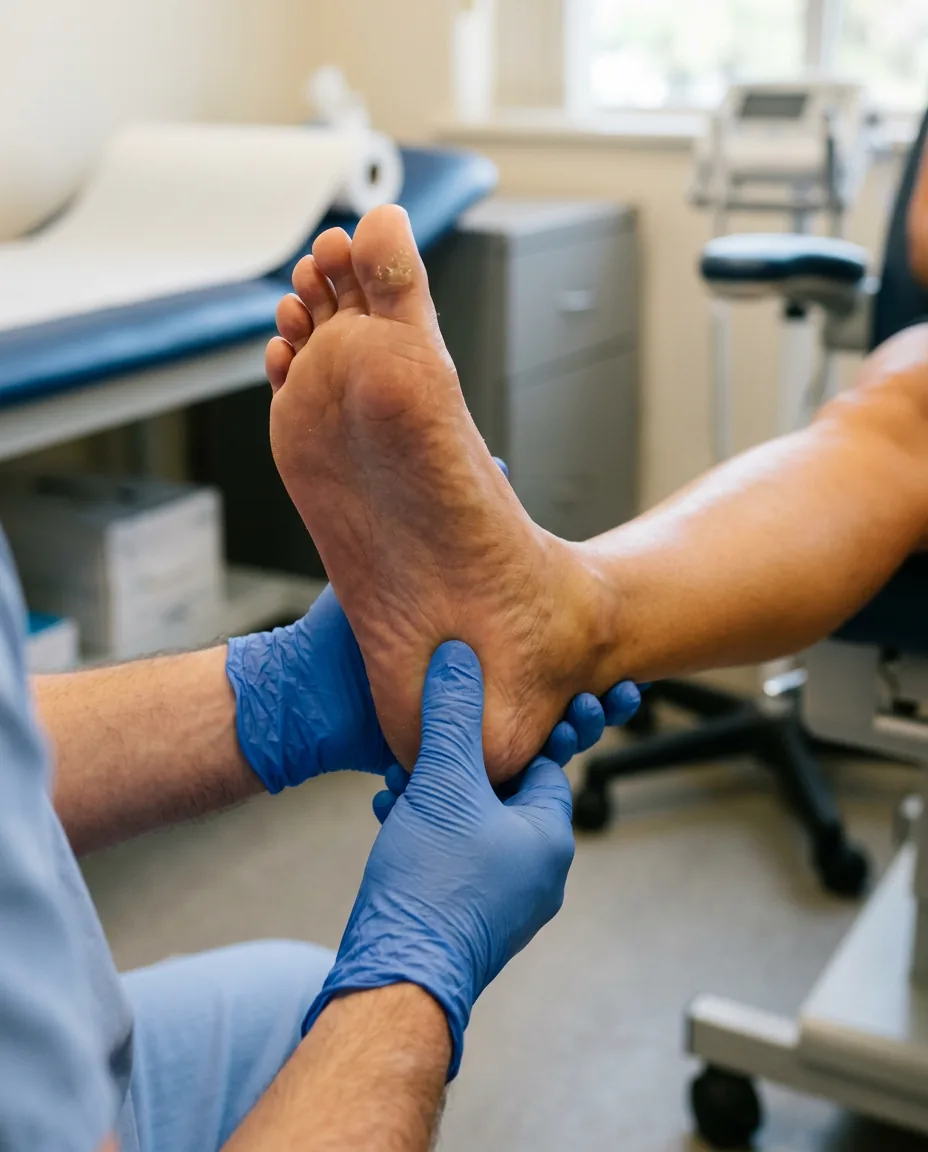
The examination involves pressing on the sore spot, which is tender for a moment. Nothing else in the appointment is uncomfortable, and we tell you before we press.
A short line in a patient's own words goes here, once we have a real one to use.
Placeholder — name and town go here.
How to tell what is causing the pain.
Heel pain is not one condition. The plantar fascia, the Achilles tendon, a nerve and the heel bone itself all cause pain in roughly the same area, and they need different things. Where it hurts and when it hurts is how we tell them apart.
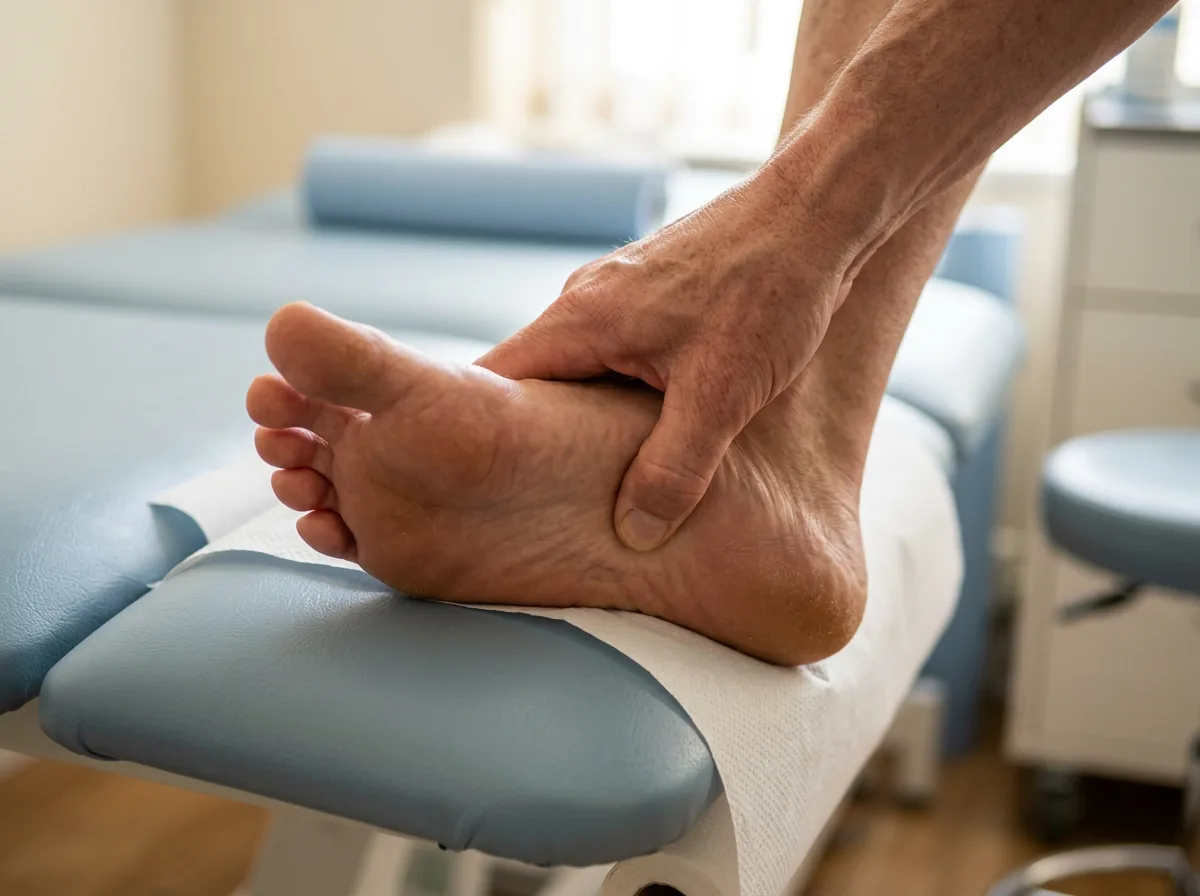
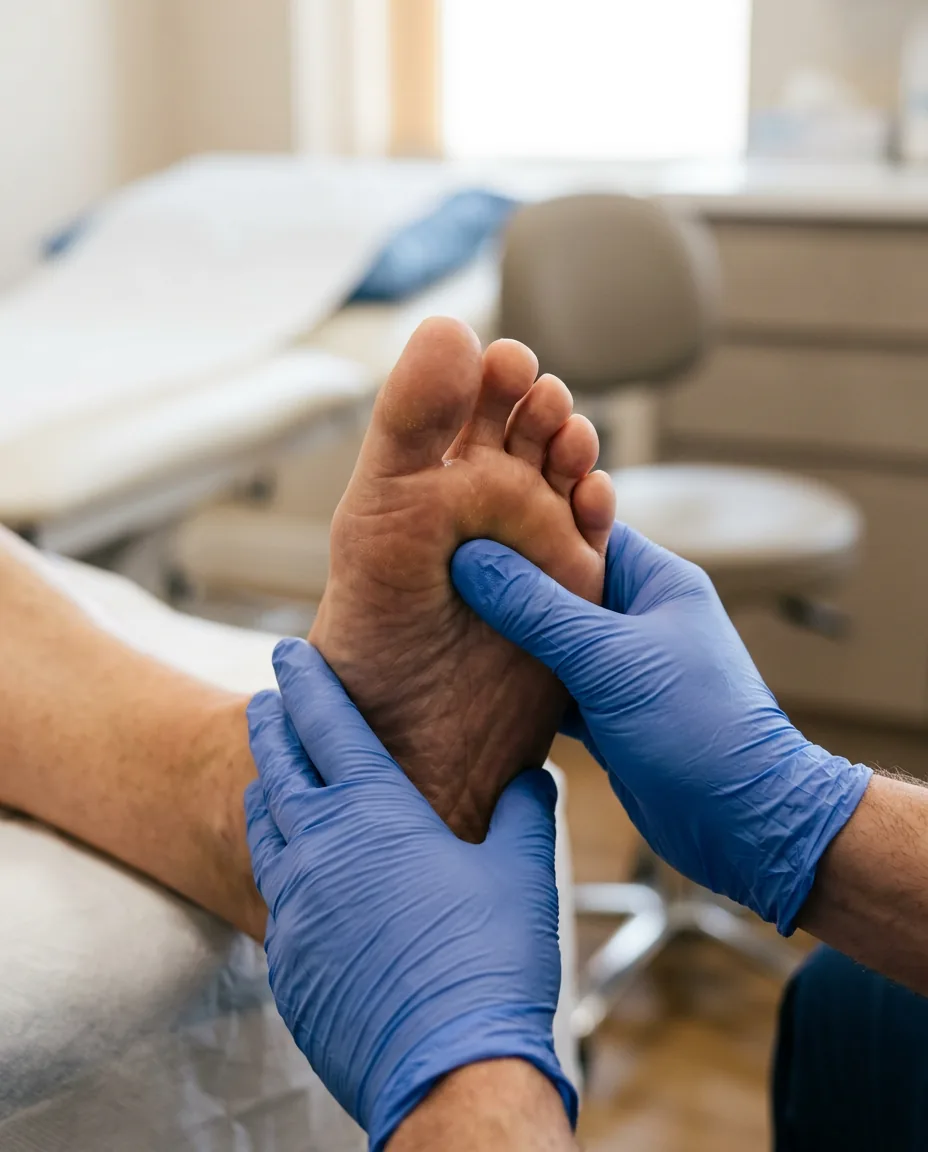
Easing the arch and heel by hand — at Complete Chiropody and Podiatry in Chester-le-Street

Stretching the foot to load the plantar fascia — at Complete Chiropody and Podiatry in Chester-le-Street

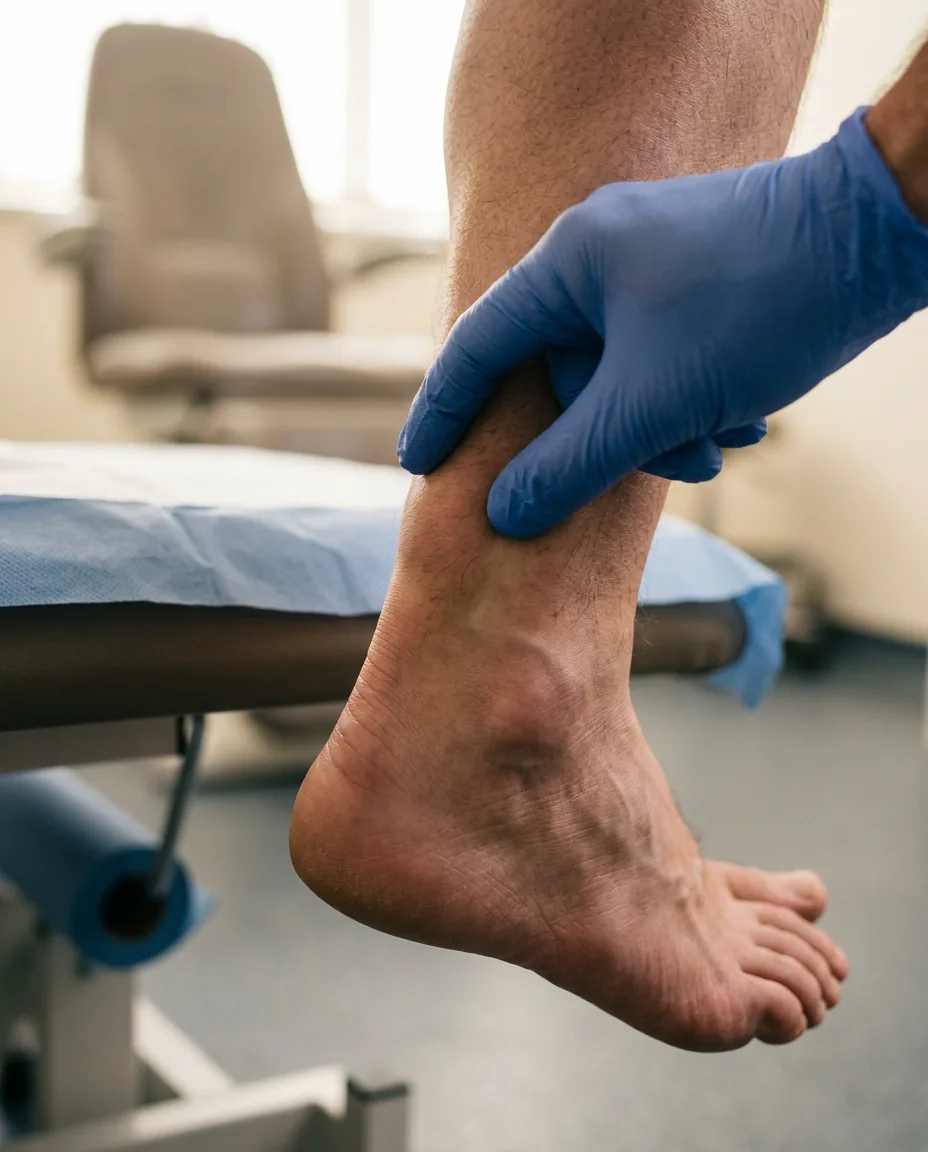
Pressing the tender spot on the inner heel — at Complete Chiropody and Podiatry in Chester-le-Street
Treatment Information
What we do about it.
01
We ask when it hurts
Morning pain that eases as you move points one way. Pain that builds through the day points another. Pain behind the heel rather than under it is a different structure altogether. The history does most of the diagnosing.
02
We examine and watch you walk
We press the specific spots that tell us which structure is involved, check the movement at your ankle and big toe, and watch you walk. A tight calf is one of the commonest contributors and it is easily missed.
03
We tell you what it is
You get a straight explanation of what is causing the pain and roughly how long it takes to settle. Most heel pain improves over months rather than days, and knowing that at the start is half the battle.
04
We give you a plan you can actually follow
Usually a stretch done twice a day, a change of footwear, something in the shoe to take the load off the sore spot, and a sensible limit on what aggravates it. If an insole made to your foot would help, we will say so — and we only say so when it will.
What you can do at home
Get it looked at sooner if…
These point to something other than ordinary heel pain — a tear, a fracture or a nerve — and they should be looked at promptly rather than stretched and rested.
Online booking opens soon
Our appointment diary is not open just yet. Leave your details and be the first to know when it opens, so you can pick a time that suits you, evenings and weekends included.
Diary opening soonOr ring 07838 652554 and we will find you a time.

Rather talk to someone?
Ring during opening hours and you will speak to a person. Home visits are arranged this way.
Plantar fasciopathy — still widely called plantar fasciitis, although the tissue changes are degenerative rather than inflammatory — accounts for most subcalcaneal heel pain. It is characterised by post-static dyskinesia, tenderness at the medial calcaneal tubercle and often a tight gastrocnemius. Differentials include fat pad atrophy, calcaneal stress fracture, Baxter's nerve entrapment, tarsal tunnel syndrome, a seronegative spondyloarthropathy in a younger patient with bilateral symptoms, and insertional Achilles tendinopathy where the pain is posterior. A heel spur seen on imaging is a consequence rather than a cause and its presence does not change treatment. Management is loading based: plantar fascia specific and calf stretching, progressive loading, footwear change and orthotic offloading, with most cases settling over six to twelve months. Imaging and injection are reserved for cases that do not respond, and corticosteroid injection carries a small risk of fascial rupture and fat pad atrophy.
Questions
Things people ask about heel pain.
Probably not, even if a scan shows one. Plenty of people have a spur and no pain at all. The spur is a consequence of the pull on the heel bone rather than the thing causing your symptoms, and removing it is rarely the answer.
Months rather than weeks for most people. That is not meant to discourage you — the pain usually eases well before it has fully resolved, and doing the stretches consistently is what shortens the timeline.
Some people do, and for them it makes a real difference. Plenty of people get there with a stretch and a better shoe. We would rather find out whether the simple things work than sell you a device on day one.
No. Complete rest tends to make it worse when you start again. Cut back what aggravates it, keep moving within comfort, and build the load back up gradually.
Usually yes, with adjustments — shorter, flatter, better shoes, and less of whatever hurts most. We will be specific about your activity rather than telling you to stop.
Still have a question?
Ask it here and we will come back to you by email, usually the same working day. If it is urgent, calling is quicker.
Online booking opens soon
Our appointment diary is not open just yet. Leave your details and be the first to know when it opens, so you can pick a time that suits you, evenings and weekends included.
Diary opening soonOr ring 07838 652554 and we will find you a time.
Rather talk to someone?
Ring during opening hours and you will speak to a person. Home visits are arranged this way.
Heel and arch pain
treatment in Chester-le-Street
Our clinic is in Chester-le-Street, right next to Tesco, so parking is free and it is less than a minute's walk from the car park to our door. We also see people from the towns and villages around it, and visit at home across the same area.