
Pain and mobility
Arthritis in the feet
Feet have thirty-three joints, and arthritis in any of them changes how you walk. We cannot cure it. We can take the load off the joints that hurt, keep the skin and nails right, and keep you walking — which is what actually decides how much it affects your life.
Treatment Summary
How long
30 minutes
What it costs
£35
No new patient fee.
Getting in
Free parking at the Tesco next door, under a minute's walk.
What we do
Does it hurt
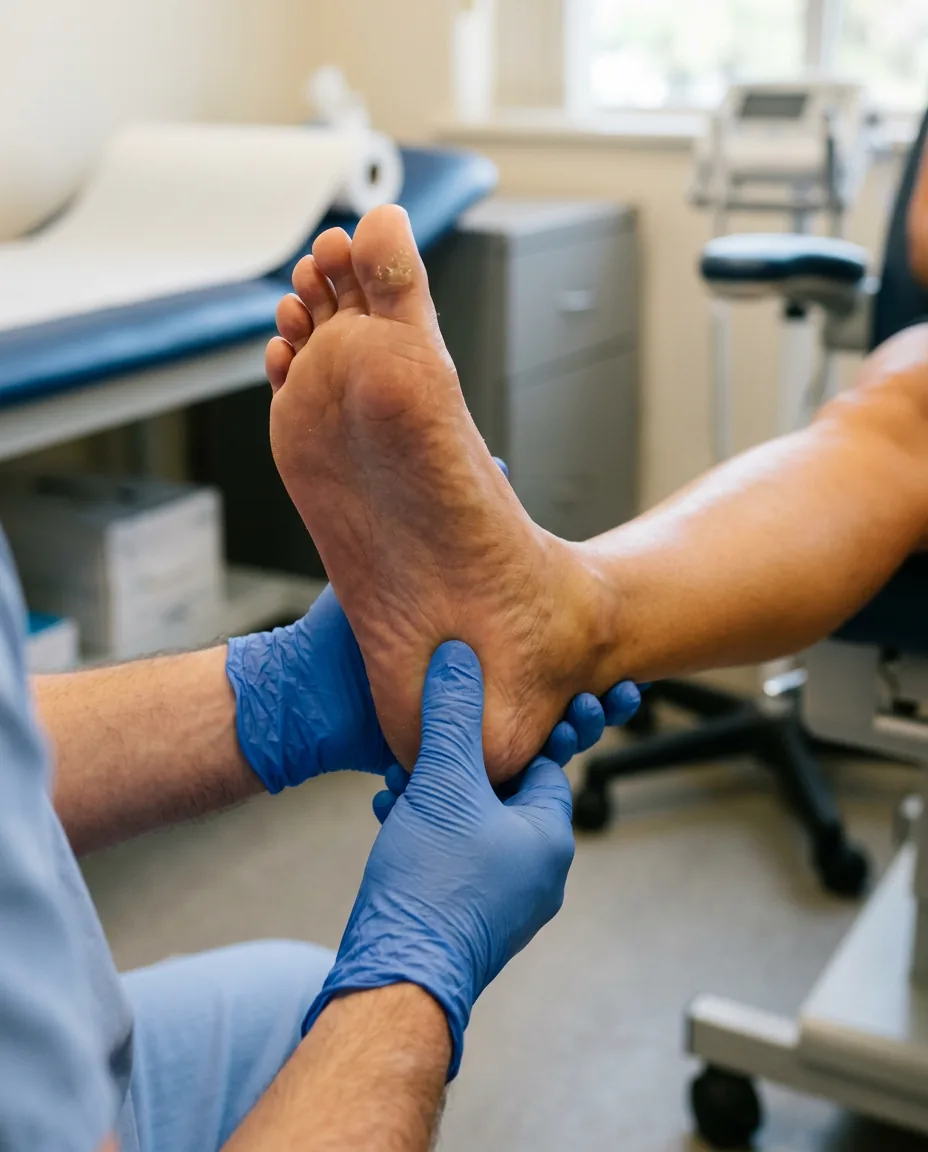
No. We move the joints through their range to see what is stiff and what is painful, which can be briefly uncomfortable, and we stop when you ask.
A short line in a patient's own words goes here, once we have a real one to use.
Placeholder — name and town go here.
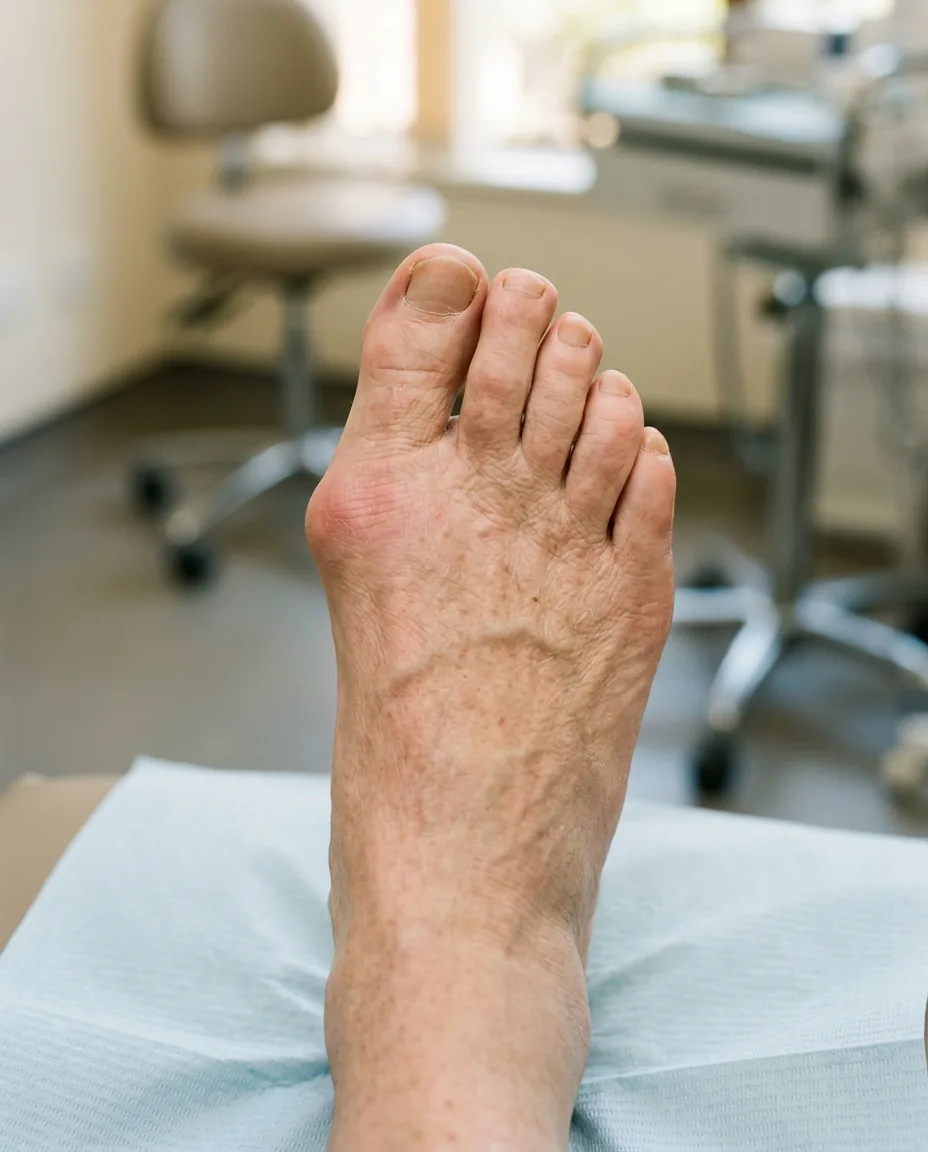
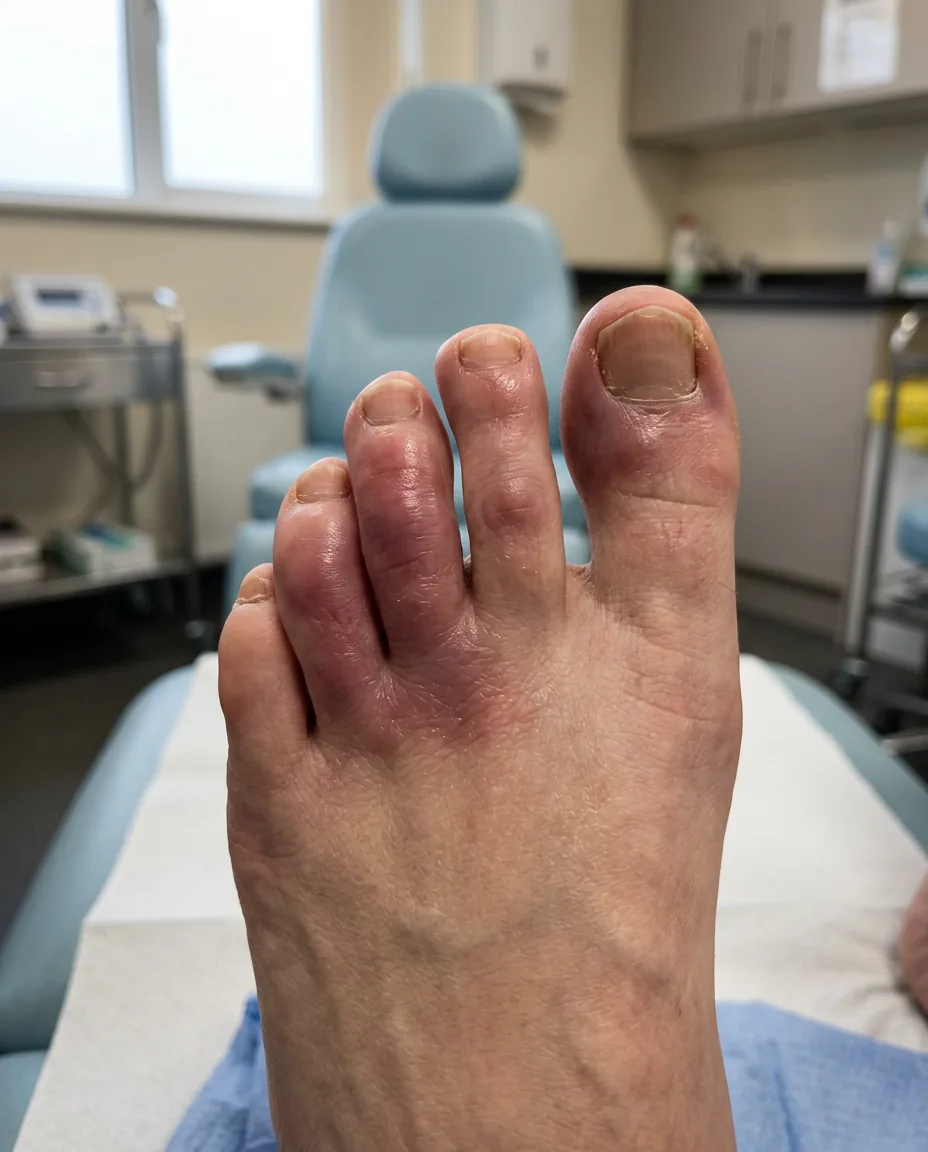
What arthritis in a foot actually feels like.
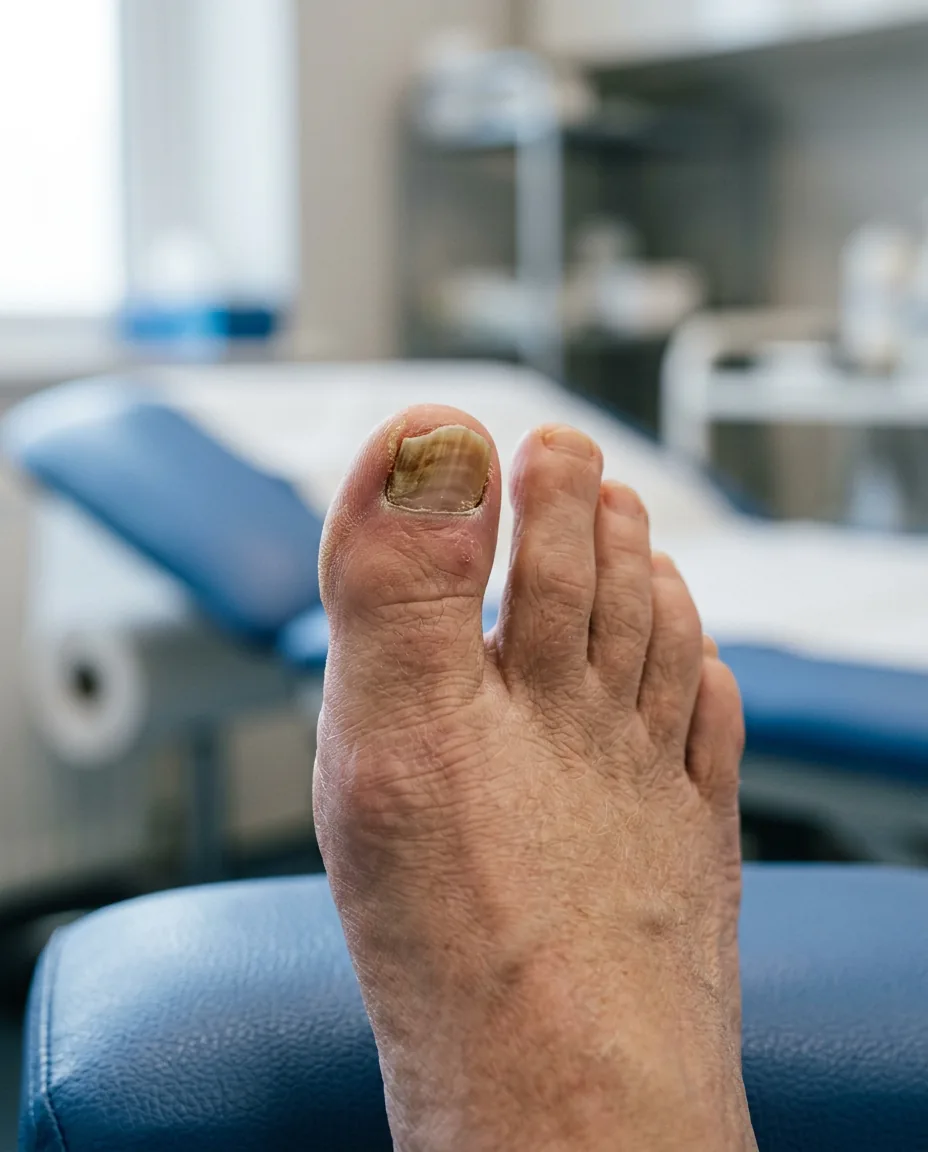
The commonest by far is the big toe joint stiffening with age. Rheumatoid and other inflammatory arthritis behave differently — usually several joints, often on both feet, and the mornings are the giveaway.
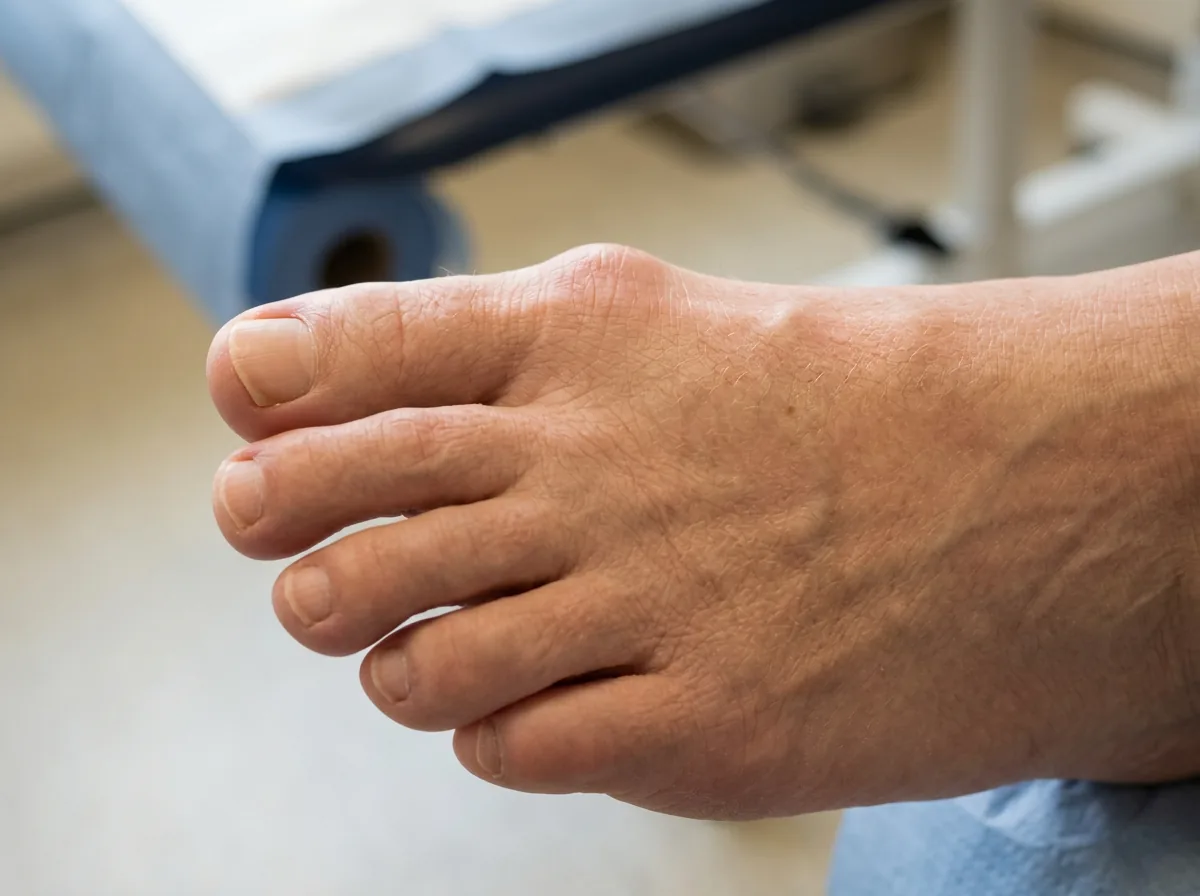
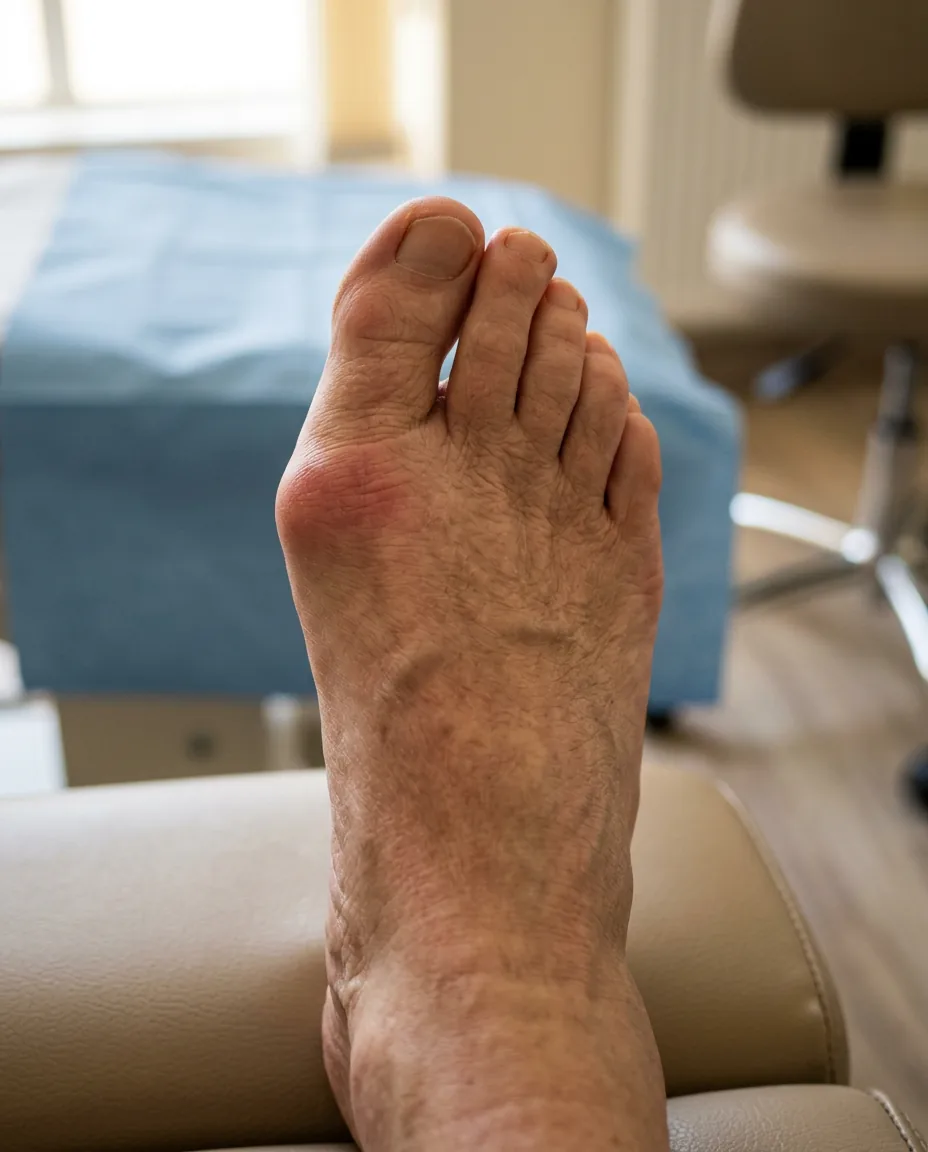
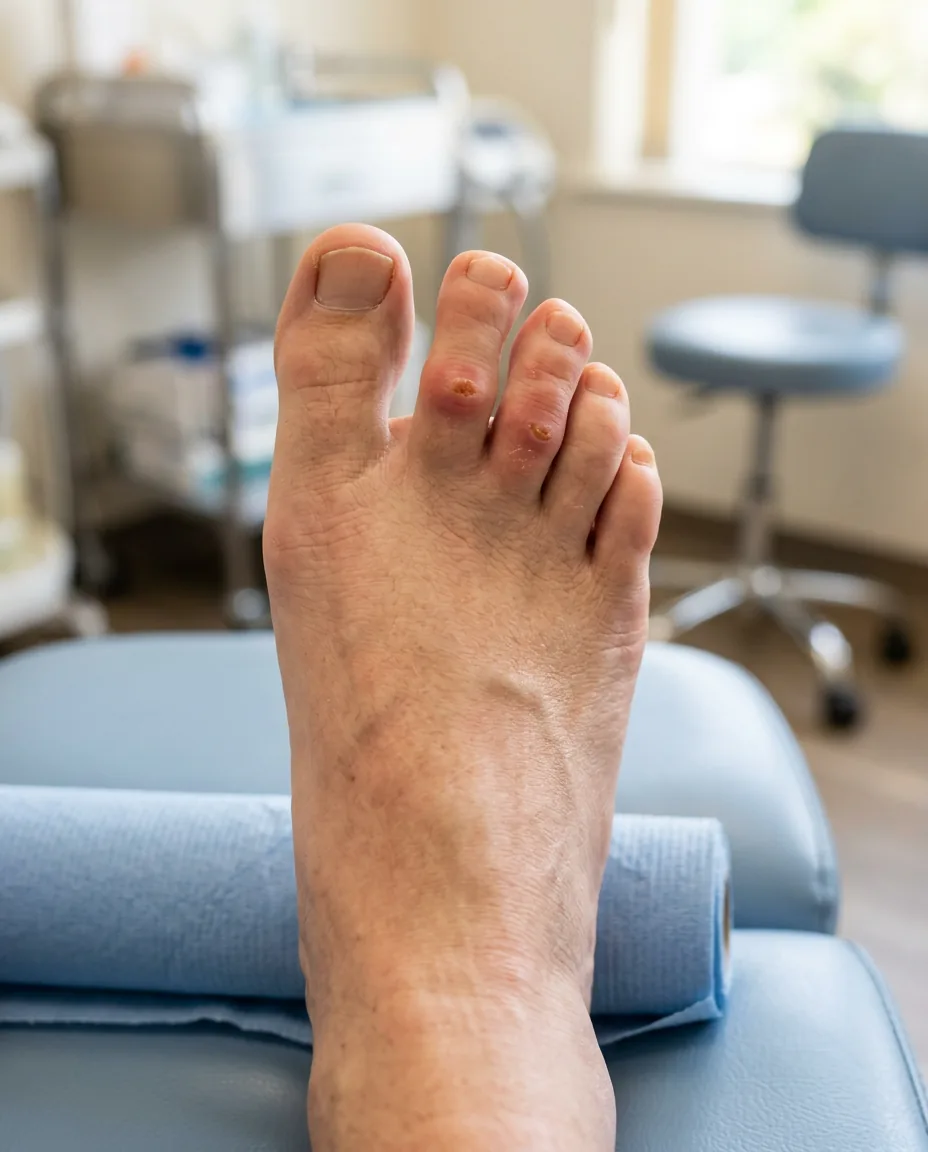
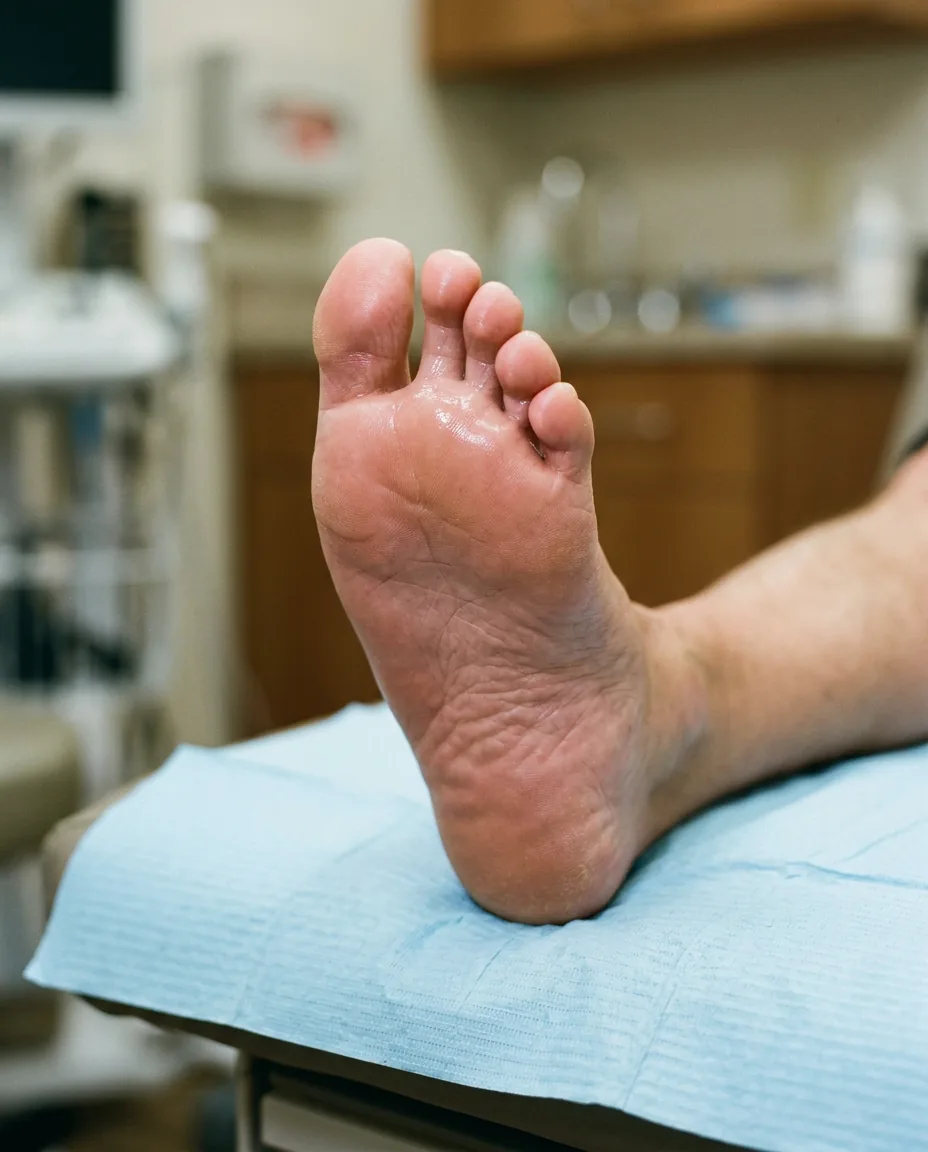
Early arthritis, a thickened big toe joint — at Complete Chiropody and Podiatry in Chester-le-Street
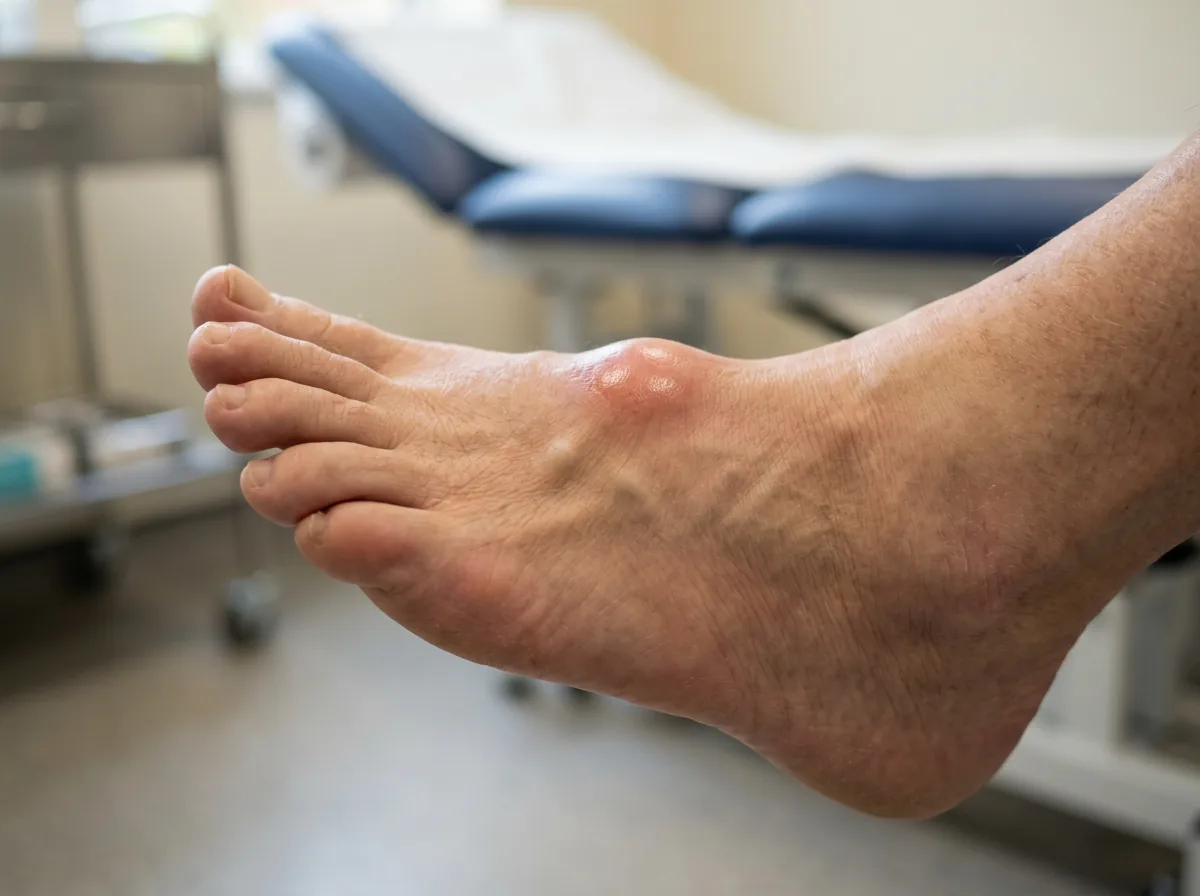
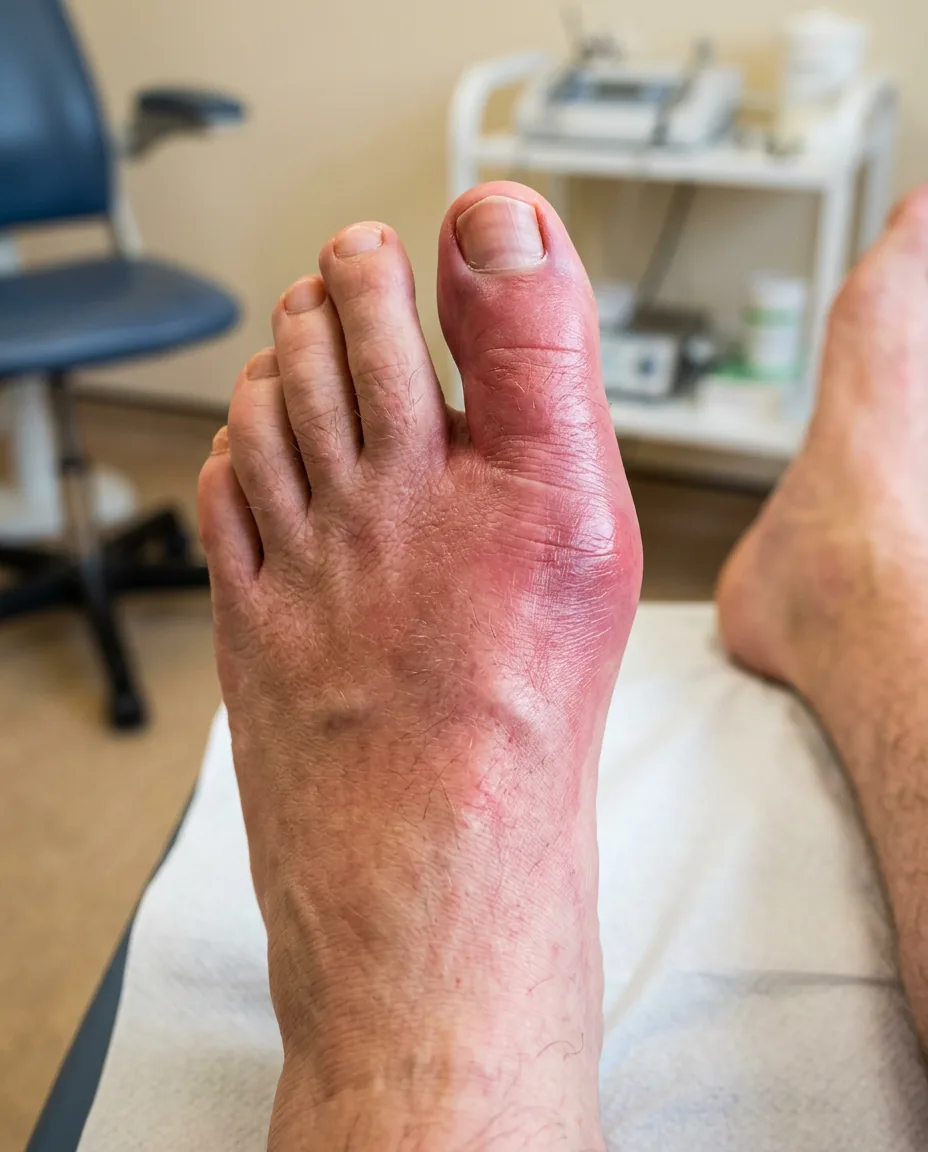
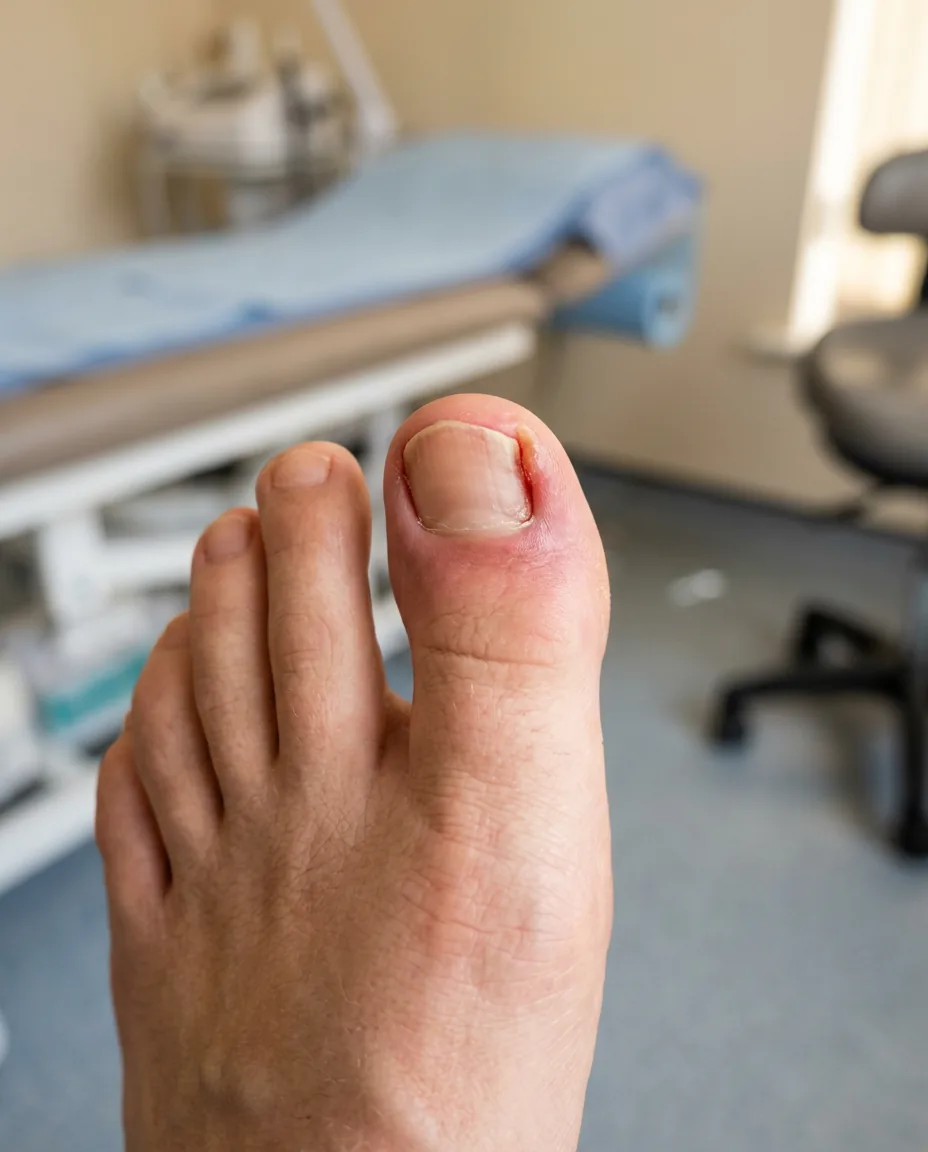
A bony lump on the top of an arthritic joint — at Complete Chiropody and Podiatry in Chester-le-Street
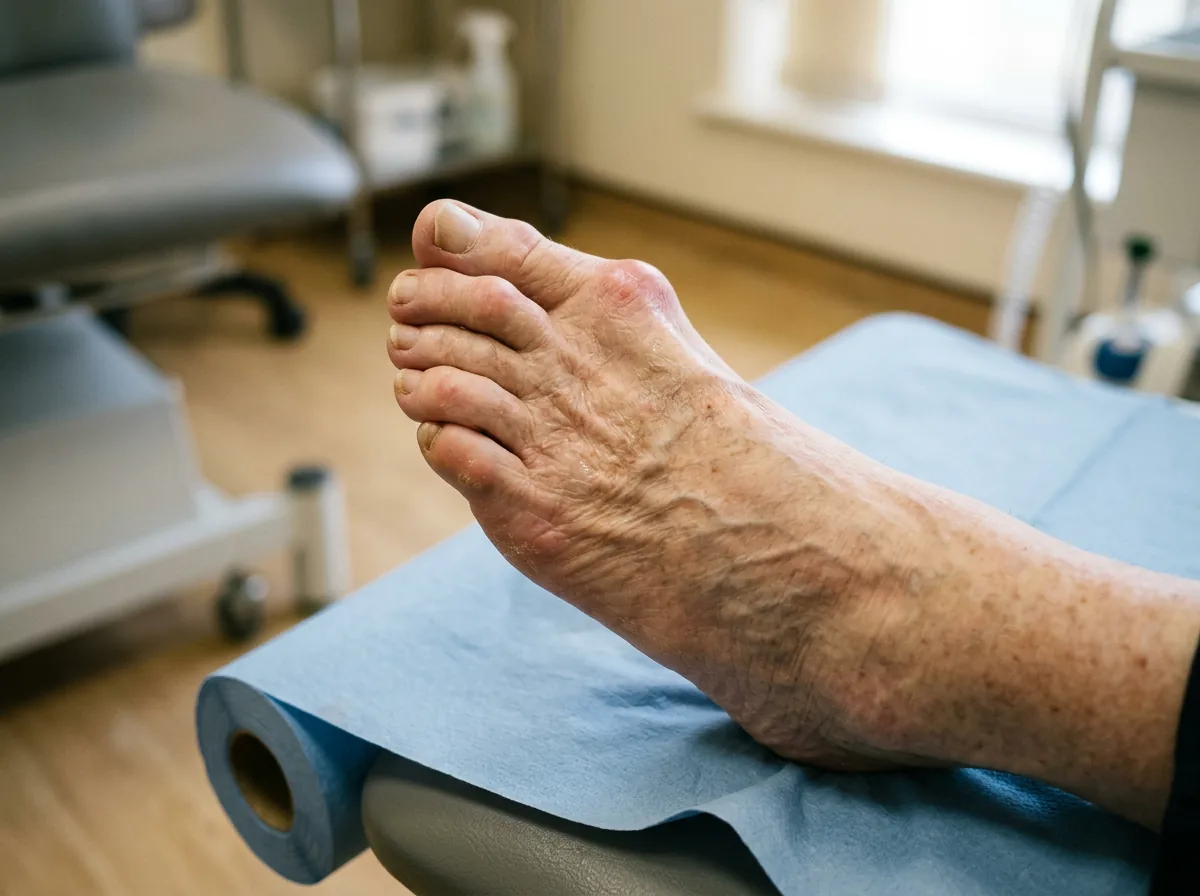
Advanced arthritis with swollen, drifting toe joints — at Complete Chiropody and Podiatry in Chester-le-Street
Treatment Information
What we do about it.
01
We check joint by joint
How much movement is left in the big toe joint, whether the pain comes on movement or at rest, and whether the pattern looks like wear and tear or something inflammatory. That distinction decides who else needs to be involved.
02
We offload what hurts
A stiff big toe joint hurts because it is forced to bend at every step. A stiffer sole, or a rocker under the front of the shoe, stops that happening — and it is often the single most effective thing we do.
03
We deal with the knock-on effects
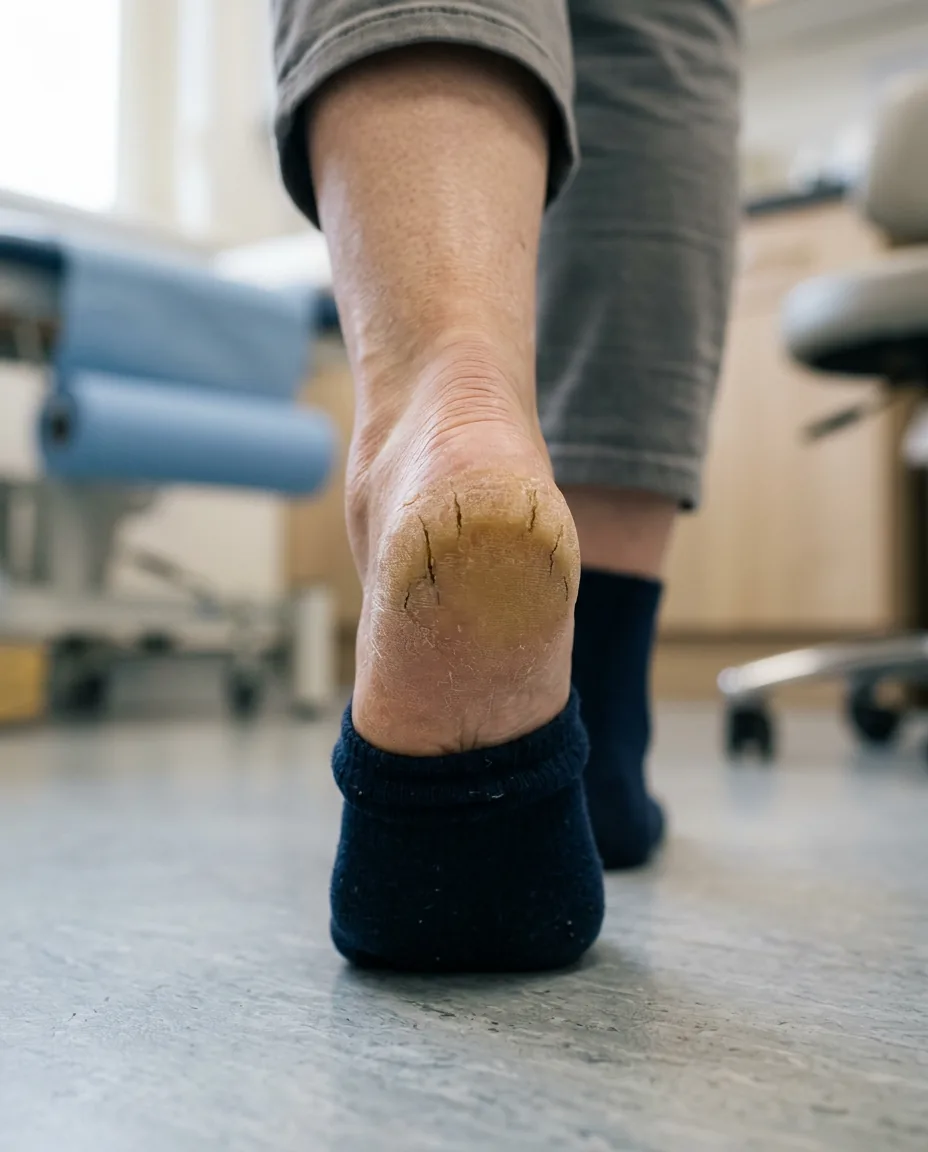
Arthritic feet build hard skin in new places as the load shifts, and nails get harder to reach as hands become less nimble. Both are part of the same appointment.
04
We know when to involve someone else
Several joints inflamed on both feet, with morning stiffness lasting an hour or more, is not simple wear and tear. If that is the pattern we write to your GP, because early treatment for inflammatory arthritis genuinely changes the outcome.
What helps at home
Get it looked at sooner if…
One hot swollen joint is gout or infection until proven otherwise, and both want seeing quickly. A foot that changes shape rapidly in someone with diabetes is urgent — ring us the same day.
Online booking opens soon
Our appointment diary is not open just yet. Leave your details and be the first to know when it opens, so you can pick a time that suits you, evenings and weekends included.
Diary opening soonOr ring 07838 652554 and we will find you a time.

Rather talk to someone?
Ring during opening hours and you will speak to a person. Home visits are arranged this way.
The commonest arthritis in the foot is osteoarthritis of the first metatarsophalangeal joint — hallux limitus progressing to hallux rigidus — with restricted dorsiflexion, dorsal osteophyte formation and pain at the end of range rather than at rest. Management reduces dorsiflexion demand: a rigid or carbon plate, a rocker sole, or an orthosis with a first ray cut-out. Midfoot and subtalar osteoarthritis are also common and present as diffuse aching with activity. Inflammatory arthropathies behave differently: symmetrical polyarthritis with prolonged morning stiffness and forefoot involvement suggests rheumatoid disease, where early metatarsophalangeal subluxation, plantar plate failure and clawing produce high plantar pressures and callus; psoriatic disease may present with dactylitis and nail changes. Suspected inflammatory arthritis is a same-week GP conversation rather than a podiatry problem alone, because delay to DMARD therapy affects joint outcome. A single acutely hot joint is septic arthritis or crystal arthropathy until excluded.
Questions
Things people ask about arthritis in the feet.
No, and nobody can. What we can do is take the load off the joints that hurt, keep the skin and nails right, and keep you walking — which is what actually determines how much arthritis affects your life.
Very often, yes. A big toe that will not bend up as far as it used to and aches when you push off is usually osteoarthritis of that joint. It is common, it is manageable, and a stiffer shoe helps more than people expect.
Not necessarily. For an arthritic big toe joint a stiff sole is better than a soft one, because it stops the joint bending. That surprises people, and it is usually the change that helps most.
Sometimes, and the wrong ones can make an arthritic joint worse by pushing it into more movement. It is worth being assessed rather than buying on spec.
Yes, for a different job. Your GP manages the disease. We manage the feet — the pressure points, the skin, the nails and the footwear — and those are what make the difference day to day.
Still have a question?
Ask it here and we will come back to you by email, usually the same working day. If it is urgent, calling is quicker.
Online booking opens soon
Our appointment diary is not open just yet. Leave your details and be the first to know when it opens, so you can pick a time that suits you, evenings and weekends included.
Diary opening soonOr ring 07838 652554 and we will find you a time.
Rather talk to someone?
Ring during opening hours and you will speak to a person. Home visits are arranged this way.
Arthritis in the feet
treatment in Chester-le-Street
Our clinic is in Chester-le-Street, right next to Tesco, so parking is free and it is less than a minute's walk from the car park to our door. We also see people from the towns and villages around it, and visit at home across the same area.