In short
The difficulty with diabetes and feet is not that problems are common. It is that they can start without hurting. Reduced feeling means a blister, a stone in a shoe or a nail cut too short can do real damage before anything tells you about it.
A daily look closes that gap, and it takes seconds.
The check
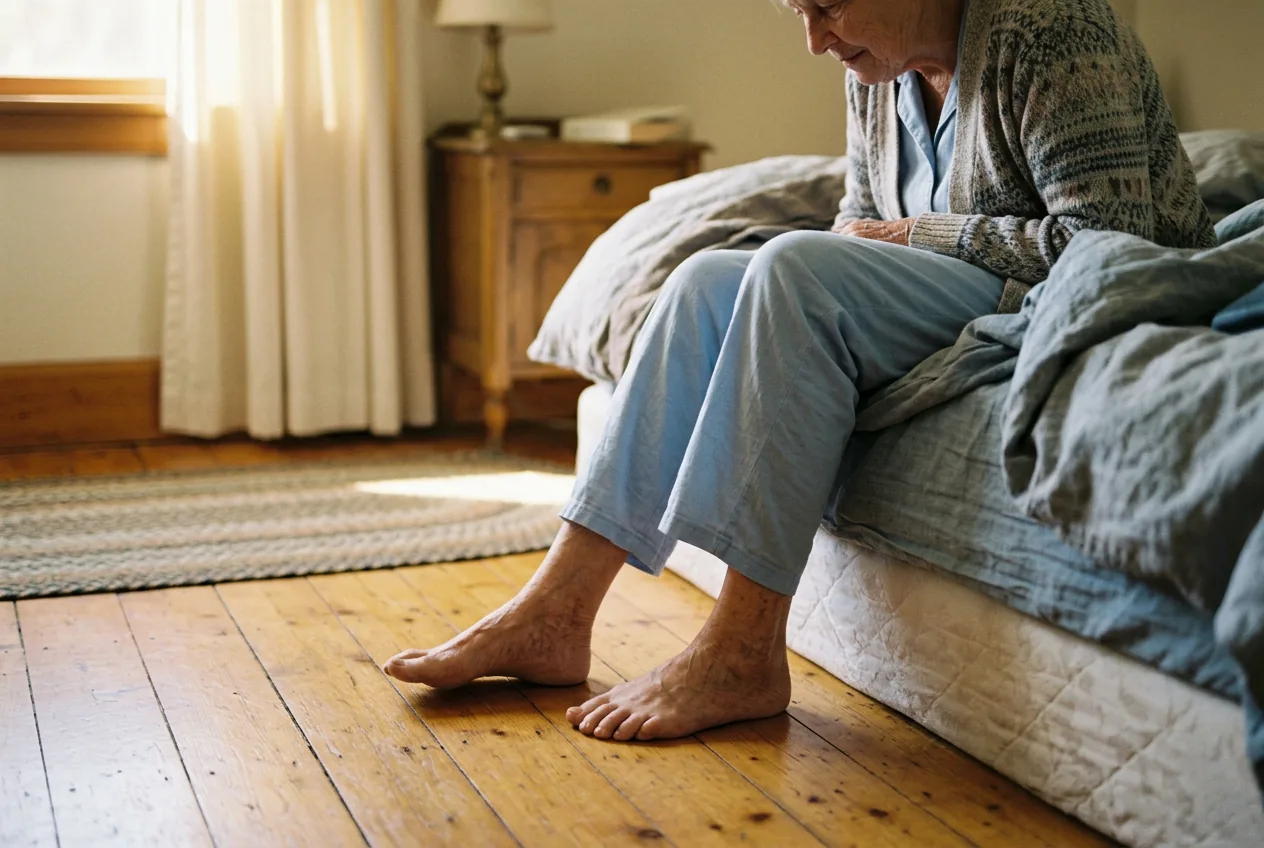
- Sit down and look at the top of each foot.
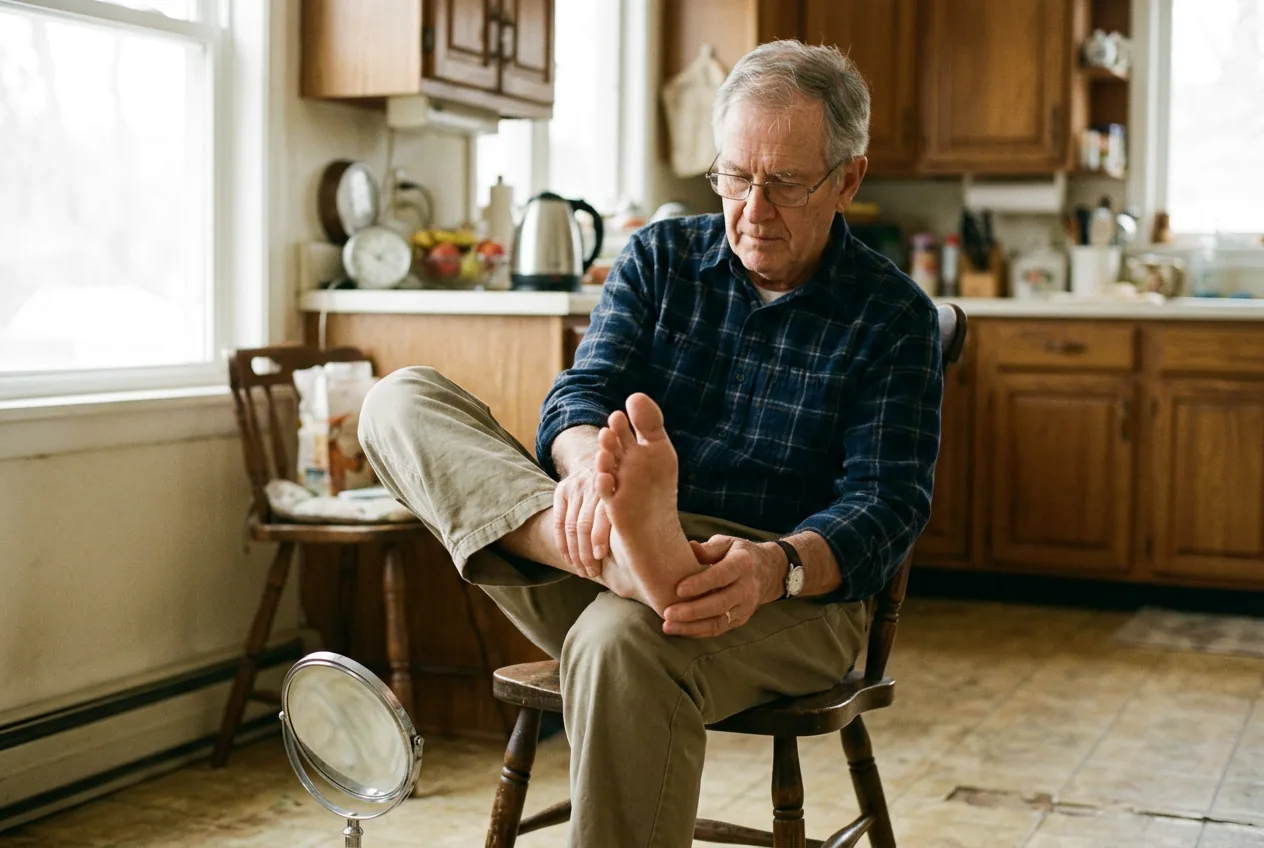
- Turn each foot over, or use a mirror on the floor, and look at the sole. This is the part people skip and the part where most problems start.
- Separate your toes and look between them, including under the little toe.
- Run a hand over both feet, feeling for anything hot, hard or damp that was not there yesterday.
If you cannot see or reach comfortably, put a mirror on the floor or ask somebody to look for you. A phone camera works too.
What you are looking for
- Any break in the skin, however small
- A blister, a graze or a sore that has not healed
- Redness, particularly in one spot rather than all over
- Swelling in one foot and not the other
- A change in colour, including pale, blue or very red
- Skin that is white and soggy between the toes
- Anything warm to the touch compared with the other foot
What to do about what you find
Most of it is nothing. A patch of dry skin, a bit of hard skin building up, a nail that needs attention: worth mentioning at your next appointment, not worth losing sleep over.
Ring the same day if there is a break in the skin that has not healed, if a foot is red or hot or swollen, if the colour has changed, or if there is any discharge or smell. Ring us, your GP, or the diabetic foot team at the hospital, whichever can see you soonest. These get worse quickly and they are much easier to deal with early.
The things that make it worse
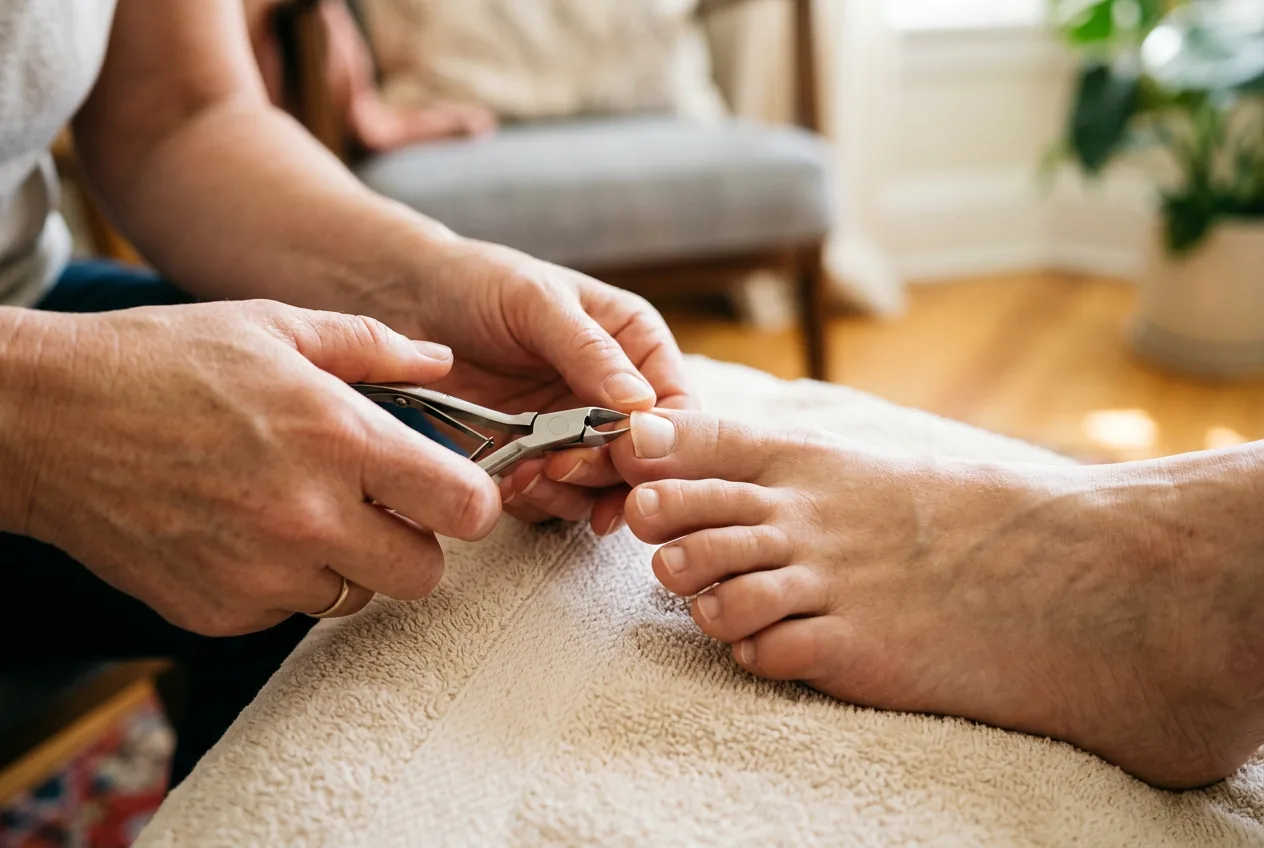
Corn plasters, blades and anything sharp used at home. Hot water bottles and radiators against feet that cannot feel temperature properly. Shoes that have never quite fitted. New shoes worn for a whole day the first time out.
This does not replace your annual check
Everybody with diabetes is entitled to a foot check through the NHS each year, and you should take it. A daily look at home and a full diabetic foot assessment sit alongside it: the assessment measures the circulation and the feeling properly and tells you which risk group you are in, and the daily check is what catches things in between.